Updated on May 27th, 2026
Today, while watching the classic Bollywood film ‘Lal Patthar,‘ a dialogue by Raj Kumar caught my attention. He mentioned the name Michelangelo not casually but with respect, comparing a character in a movie played by Vinod Mehra, who knows many things/skills at the same time. That moment stayed with me. I paused the movie and searched. Who was Michelangelo? What made his name so powerful that it travelled from Renaissance Italy into an Indian classic film?
This curiosity led me beyond a name, into the life of a man who reshaped art, architecture, and the human understanding of beauty. A man whose biography reads like a journey of courage, discipline, and divine vision.
Carving Greatness: The Michelangelo Mindset That Shapes Destiny
Michelangelo’s life was not merely a chapter in art history; it was a lesson in how greatness is carved from struggle, devotion, and belief. Born on March 6, 1475, in Caprese, Italy, he grew from a quiet boy fascinated by stone into one of the most influential creators of all time. He was not only one of the best-known artists of his time but also, probably, one of the best artists ever. His journey is more than a biography—it is a map for anyone who wants to pursue their purpose with strength, clarity, and courage. This is a reflection of his spirit, written to motivate those who want to live with the same fire.
The Beginning: Where Talent Meets Relentless Will
Michelangelo did not rise from luxury or comfort; he rose from the dusty floors of workshops and the echoes of chisels striking marble. While others his age studied traditional subjects, he wandered into the world of creation—learning anatomy, studying form, and observing the divine architecture of the human body. His education was not from classrooms; it was from discipline, curiosity, and an unshakable desire to understand life.

Most would call this an obsession. He called it purpose.
There is a lesson here for every soul chasing a dream:
Talent opens the door, but dedication keeps it open.
Michelangelo built his greatness not on what he was given, but on what he refused to give up.
He made a nude crucifix when he was just 18 years old. This crucifix didn’t give Michelangelo’s career much of a boost—in fact. After centuries of presumed loss, the crucifix was rediscovered in a convent in 1962, covered with hundreds of years of bad paint jobs. Last year (2024), it made headlines again when it was finally returned to its original home in Florence.


The Sculptor Who Freed the Angel in the Stone
This kneeling angel holding a candlestick, measuring just about a foot and a half in height, is one of Michelangelo’s earliest works.
Michelangelo often said something that reveals the core of his genius:
“I saw the angel in the marble and carved until I set him free.”
This was not only about sculpture—it was about life. He believed that everything and everyone holds greatness inside. The world may only see rough stone, but the visionary sees the angel within. The artist, the dreamer, the entrepreneur, the leader—all of them carve, polish, and release what others cannot see.

In our own lives, we are both the marble and the sculptor. We hold our future inside us, and we shape it through discipline, patience, and belief. The question is not whether greatness exists—the question is whether we are willing to carve.
The Sistine Chapel: A Victory Against Limitations
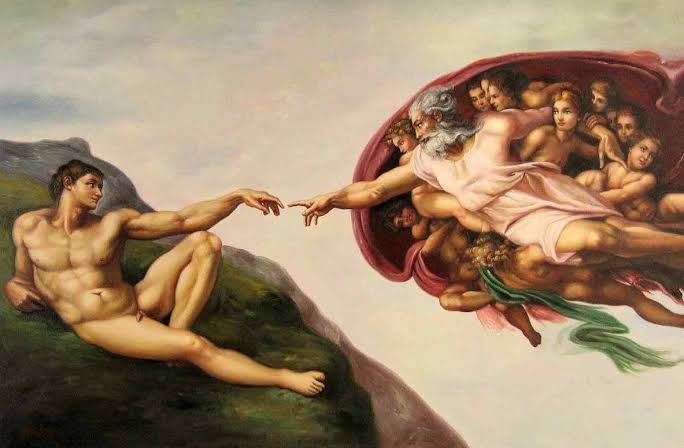
When the Pope asked Michelangelo to paint the Sistine Chapel ceiling, he initially refused. He viewed himself as a sculptor instead of a painter. He was inexperienced in fresco. He had doubts about the task. However, the turning point arrived when he accepted the challenge, knowing he was the right person, not because it was easy.
For four years, suspended on scaffolding, paint dripping into his eyes, joints aching, and sleep sacrificed, he created a masterpiece that changed the world of art forever.
The lesson here is sharp and beautiful.
Life will ask you to attempt things you do not feel ready for. Say yes anyway.
Greatness rarely appears in comfort. It appears in the moments you rise beyond what you think you are capable of.
The Struggle That Shapes Destiny
Michelangelo was not a man of ease; he was a man of endurance. He worked for days without rest, slept in his studio, wore the same dusty clothes for weeks, and fought with kings, popes, rivals, and even himself. He questioned his path, doubted his strength, and felt the loneliness that comes with ambition. Yet, he never walked away from his purpose.
His life teaches us something powerful:
Do not fear the weight of your calling. Fear walking away from it.
Struggle is not a sign that you are failing; it is a sign that you are building something worth achieving. The marble resists before it reveals beauty. Life resists before it reveals purpose.
A Legacy That Still Breathes Today
When Michelangelo died on February 18, 1564, the world lost a body—but not a vision. His art remains, his philosophy echoes, and his spirit whispers to every dreamer who stands on the edge of possibility.
David still stands as a symbol of courage.
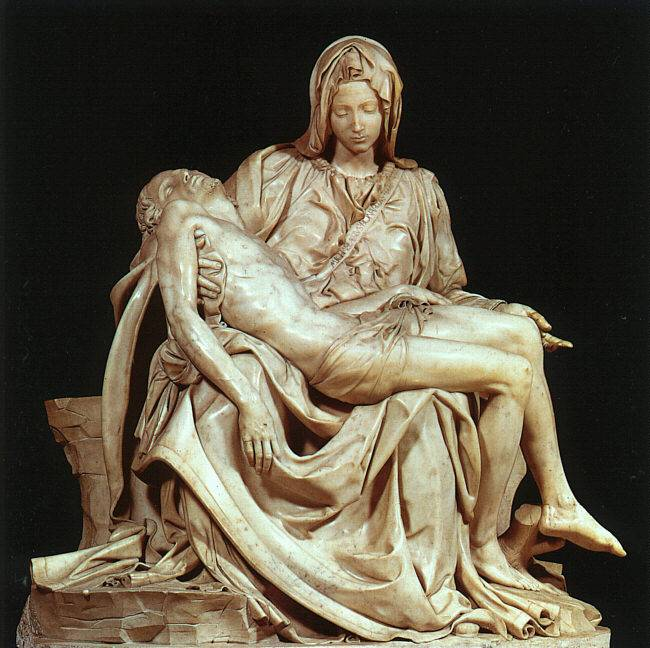
The Pietà still holds the softness of sorrow and faith.
The Sistine Chapel still carries the sky on its ceiling.
And Michelangelo still reminds us that our destiny is not found—it is carved.
His most iconic works—David, Pietà, the Sistine Chapel ceiling, The Last Judgment, and the architectural marvel of St. Peter’s Basilica—are not just masterpieces. They are proof of what happens when a person gives their entire soul to their craft.


Carve Until the Angel Appears
Today, because of a Bollywood film, I discovered a mindset I want to carry with me:
We are born with marble.
We become Michelangelo through action.
Destiny is not found—it is carved.
Books & Biographies
- The Life of Michelangelo – John Addington Symonds, Modern Library
- Michelangelo: A Life in Six Masterpieces – Miles J. Unger, Simon & Schuster
- Michelangelo and the Pope’s Ceiling – Ross King, Penguin Books
William Wordsworth’s Timeless Lesson for a Noisy World

Explore William Wordsworth’s insight on wisdom, humility, and the beauty of simple living in a rushed world.


No Comment