Updated on June 10th, 2026
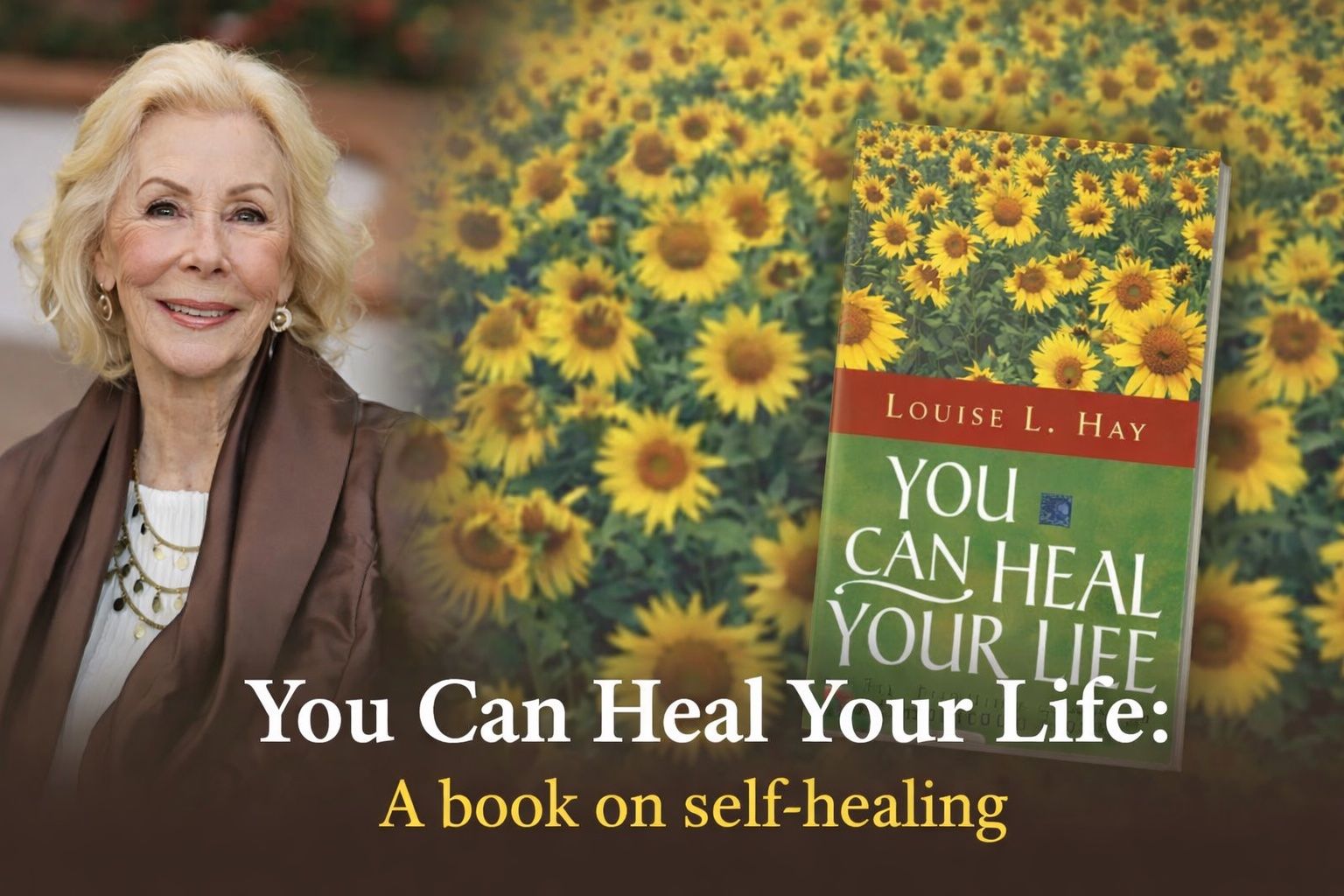
Some books arrive quietly into our lives and yet leave behind a profound inner shift that lasts for decades. You Can Heal Your Life, written by Louise Hay, is one such work. It is not merely a book to be read; it is an experience to be lived, questioned, resisted at times, and eventually embraced. First published in the 1980s, the book continues to resonate across generations because it speaks to a universal human longing: the desire to heal, to be whole, and to love oneself without conditions.
The Central Idea: Thoughts Shape Our Reality
At the heart of You Can Heal Your Life lies a simple yet radical idea—that our habitual thoughts, beliefs, and emotional patterns play a decisive role in shaping our physical health, relationships, and overall quality of life. Louise Hay gently but firmly suggests that illness is not a punishment, but a signal. It is the body’s language, reflecting unresolved emotions, suppressed fears, and deeply ingrained negative beliefs.
One of her most quoted lines captures this philosophy beautifully:
“Every thought we think is creating our future.”
This statement is not presented as dogma but as an invitation to observe the inner dialogue we constantly engage in and to notice how often it is critical, fearful, or dismissive of our own worth.
Self-Love as the Foundation of Healing
If there is one message that Louise Hay returns to again and again, it is the power of self-love. She asserts that loving oneself is not vanity or selfishness; it is the most practical and transformative act a person can undertake. According to her, many emotional and physical ailments originate from self-rejection, guilt, and chronic self-criticism.
She writes with striking clarity:
“If we are willing to do the mental work, almost anything can be healed.”
This “mental work” begins with forgiveness—of others, but more importantly, of oneself. Hay encourages readers to let go of the past, not because it did not hurt, but because clinging to it perpetuates suffering in the present.
The Body as a Mirror of the Mind
One of the most discussed sections of the book is Louise Hay’s exploration of the mind-body connection. She presents a symbolic understanding of physical ailments, suggesting that different parts of the body correspond to specific emotional patterns. While modern medicine may debate the literal accuracy of these correlations, the psychological insight behind them is powerful.
Hay invites readers to ask inward questions rather than merely fight symptoms. What belief might be operating beneath this pain? What emotional story is asking to be acknowledged? This reflective approach does not reject medical treatment but complements it with emotional awareness and compassion.
Affirmations: Rewriting the Inner Script
Affirmations form the practical core of You Can Heal Your Life. Louise Hay introduces them not as magical phrases but as tools for re-educating the subconscious mind. Repetition, she explains, is how negative beliefs were initially learned and how they can be transformed.
A well-known affirmation from the book reads:
“I approve of myself. I love and accept myself.”
At first, such statements may feel uncomfortable or even false. Hay anticipates this resistance and reassures the reader that discomfort is often a sign that healing is beginning. The practice is not about instant belief but about willingness—willingness to choose kinder thoughts, one moment at a time.
Emotional Responsibility Without Self-Blame
A subtle but important distinction in the book is between responsibility and blame. Louise Hay does not suggest that people are at fault for their suffering. Instead, she emphasises empowerment. If our thoughts have contributed to our current reality, then new thoughts can also help transform it.
She writes with compassion:
“We are each responsible for all of our experiences.”
This responsibility is not heavy or punitive; it is liberating. It places the possibility of change back into the hands of the individual, where it truly belongs.
Why the Book Still Matters Today
In an age of constant distraction, performance pressure, and emotional burnout, You Can Heal Your Life feels more relevant than ever. Its language is simple, almost conversational, yet its implications are profound. The book does not promise instant miracles. Instead, it offers something more sustainable—a lifelong relationship with self-awareness, kindness, and inner dialogue.
Louise Hay’s enduring legacy lies in her insistence that healing is not about becoming someone else, but about remembering who we truly are beneath fear and conditioning.
A Quiet Invitation to Begin Again
Reading You Can Heal Your Life is like sitting with a wise, patient friend who refuses to judge you but also refuses to let you remain unkind to yourself. It invites reflection rather than argument, practice rather than perfection, and love rather than struggle.
As Louise Hay gently reminds us:
“You have the power to heal your life, and you need to know that.”
Sometimes, that knowing is the first and most important step.
Chasing Clouds: A Beautiful Journey from Sacred Ganga to Mountains

Chasing Clouds: A beautiful journey from Haridwar to Mussoorie and Landour, exploring monsoon mountains, misty roads, nature, love and unforgettable moments.


No Comment