Updated on June 13th, 2026
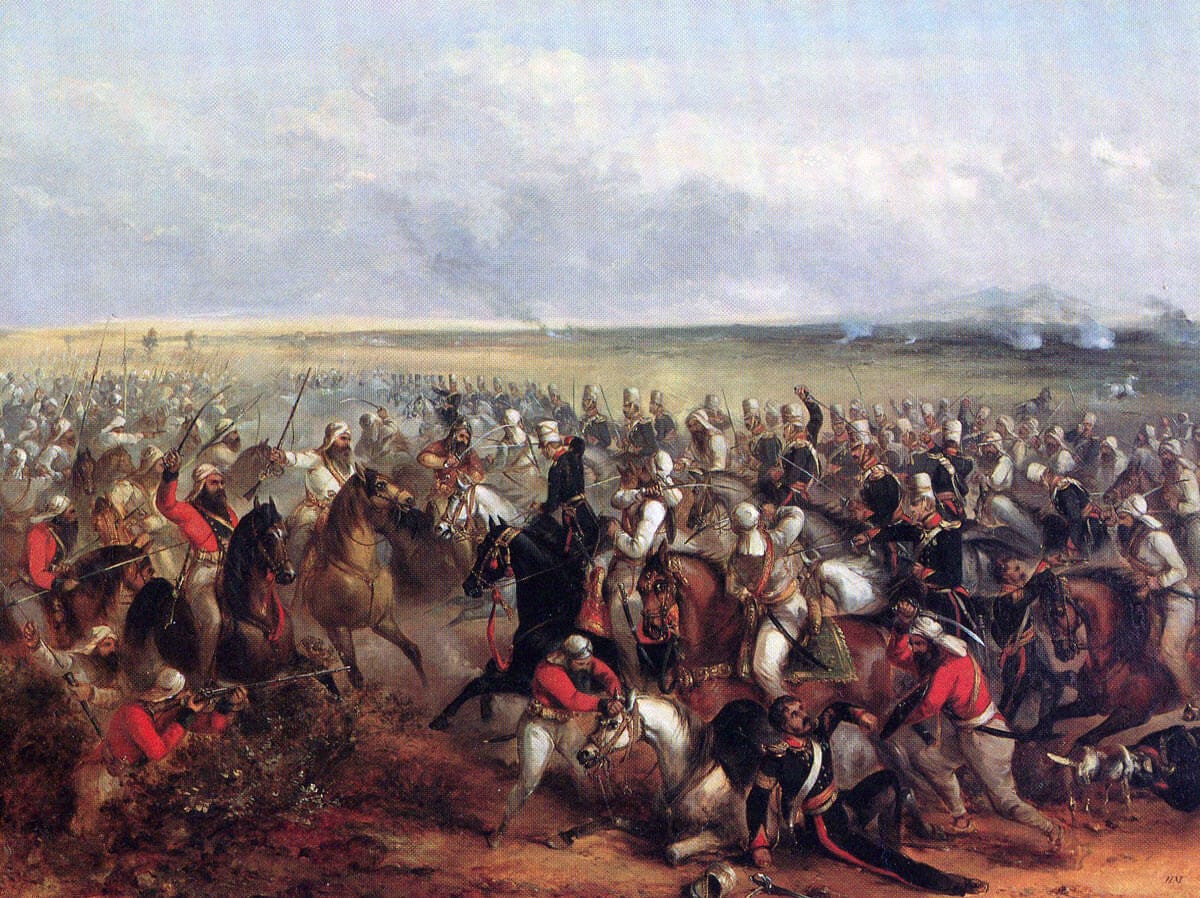
The Battle of Chillianwala, fought on 13 January 1849 during the Second Anglo-Sikh War, represents one of the most fiercely contested and controversial engagements between the Sikh Khalsa Army and the British East India Company. While the battle did not yield a clear strategic victory for either side, it inflicted heavy casualties on British forces and dealt a profound psychological blow to imperial confidence. This article examines the political context, military leadership, battlefield dynamics, and historical significance of Chillianwala, arguing that the encounter exposed the vulnerabilities of British colonial warfare and reaffirmed the resilience and discipline of the Sikh military tradition.
Political Background: Punjab After Maharaja Ranjit Singh
The death of Maharaja Ranjit Singh in 1839 marked the beginning of political fragmentation within the Sikh Empire. Court factionalism, weakened central authority, and increasing British intervention destabilised Punjab. Although the First Anglo-Sikh War resulted in British ascendancy, the Khalsa Army retained its professional structure and martial ethos. The Second Anglo-Sikh War emerged from unresolved tensions, rebellion within British-controlled territories, and Sikh resistance to indirect colonial domination. Chillianwala unfolded within this climate of mistrust, defiance, and competing sovereignties.
Commanders and Strategies: Two Military Traditions Collide

The Sikh forces were led by Sher Singh Attariwala, a seasoned commander who understood both the terrain and the psychology of warfare. Opposing him was Lord Hugh Gough, Commander-in-Chief of British forces in India, known for his aggressive and frontal assault tactics.
The Battlefield and Conduct of the Battle
The battlefield near Chillianwala was characterised by thick jungle, broken ground, and limited visibility. These conditions disrupted British formations and diminished artillery effectiveness. On the afternoon of 13 January 1849, British forces advanced under the assumption that Sikh troops were withdrawing. Instead, they encountered a fortified and resolute Khalsa Army.
Intense artillery exchanges quickly gave way to close-quarter combat. Sikh infantry and cavalry exploited their familiarity with the terrain and demonstrated exceptional discipline in hand-to-hand fighting. British units became disoriented, several regiments suffered heavy losses, and command cohesion deteriorated. The engagement lasted several hours and ended inconclusively as darkness forced both sides to disengage.
Casualties, Losses, and Psychological Impact
Chillianwala ranks among the bloodiest battles fought by the British in India. Casualties were exceptionally high, and the loss of regimental colours shocked Victorian military sensibilities. Although British command avoided declaring defeat, reactions in Britain were severe. Newspapers criticised leadership failures, and parliamentary debates questioned the conduct of the campaign.
For the Sikhs, the battle reinforced collective morale and validated the fighting capability of the Khalsa Army, even as the broader strategic situation remained unfavourable.
Strategic Outcome and the Road to Annexation
Despite the tactical resilience shown at Chillianwala, the Sikh forces lacked the resources to sustain prolonged resistance against the British armies that were reinforced. Subsequent engagements, particularly the Battle of Gujarat, resulted in a decisive British victory and the formal annexation of Punjab. Nevertheless, Chillianwala forced the British to reassess tactics, delay operations, and acknowledge the high cost of conquest.

Historical Significance and Legacy
The significance of Chillianwala lies less in territorial outcomes and more in its symbolic and moral dimensions. It exposed the limits of imperial power, challenged assumptions of colonial superiority, and underscored the effectiveness of indigenous military organisation. In Sikh historical memory, Chillianwala stands as a testament to courage, sacrifice, and resistance against overwhelming odds. In colonial history, it remains a cautionary episode illustrating how empire was neither inevitable nor uncontested.

Historical Significance: Legacy of Honour and Resistance
The Battle of Chillianwala occupies a unique place in colonial and Sikh history. For the British, it exposed the dangers of arrogance and tactical rigidity. For the Sikhs, it became an enduring testament to bravery, unity, and sacrifice. Even in defeat, the Khalsa Army demonstrated that moral courage and discipline can challenge even the most powerful empires. Chillianwala continues to inspire historical reflection on resistance, identity, and the true price of imperial expansion.

References
- Cunningham, J. D. A History of the Sikhs. John Murray, London.
- British Library Archives, Second Anglo-Sikh War (1848–1849).
- Singha, H. S. The Encyclopedia of Sikhism. Punjabi University, Patiala.
- Contemporary British Newspaper Reports on the Battle of Chillianwala (1849)
You Can’t Go in the Same River Twice: Travel Experiences

A reflective travel blog on Dalhousie, Khajjiar, McLeod Ganj, Dharamkot, Kasol and Tosh, exploring change, travel and life’s deeper meaning.


No Comment