Updated on June 13th, 2026
The Jeffrey Epstein scandal is not remembered only because of the horror of his crimes. It is remembered because it revealed something even darker: how power can protect crime, how systems can be bent, and how victims can be silenced for years while the world looks away.
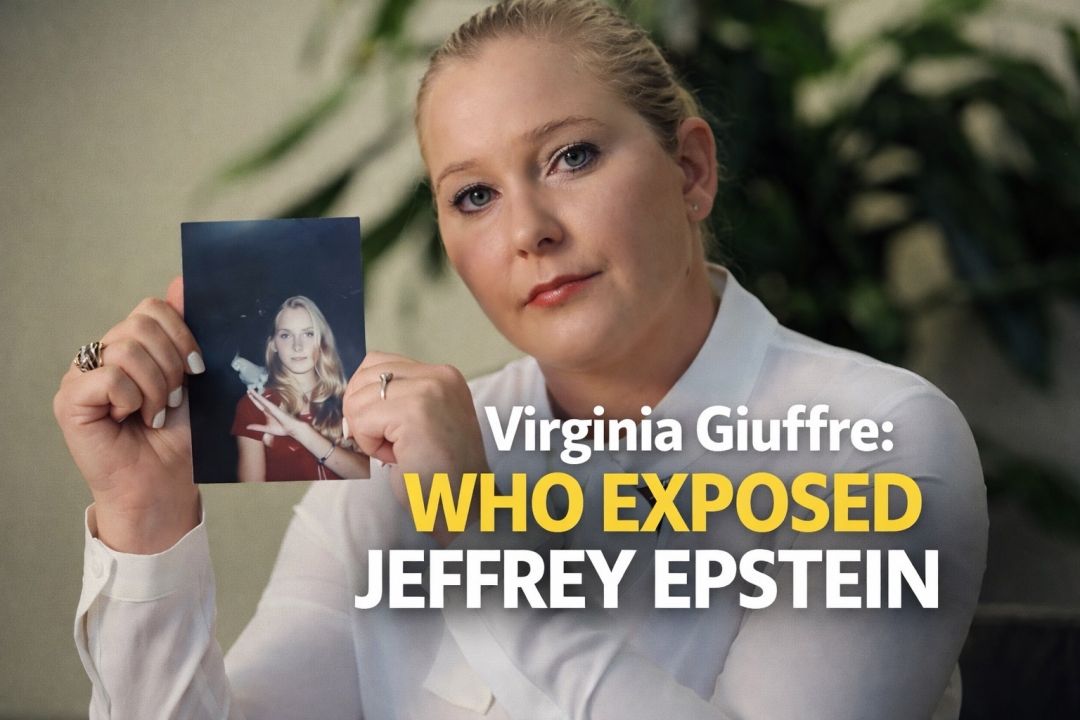
At the heart of this story stands one name that changed everything — Virginia Giuffre. She became the most prominent survivor to publicly expose Epstein’s trafficking operation and the role played by those around him, especially Ghislaine Maxwell. But Giuffre was not the first woman to raise an alarm. She was the woman whose voice finally broke through the wall.
Today, as more documents and court records continue to circulate and public interest remains intense, the Epstein case still feels unfinished. It is not just about what Epstein did. It is about who enabled him, who protected him, and how long the world allowed it to continue.
Epstein’s Real Power was not Money — It was Access
Jeffrey Epstein carefully built an image of himself as a sophisticated financier with elite connections. He moved in circles where billionaires, politicians, academics, celebrities, and royalty mingled. His homes were not just properties; they were stages where influence and status were displayed like currency.
This access became his greatest weapon. It gave him protection. It gave him legitimacy. And it gave him the ability to operate for years without being stopped.
The Recruitment was a system, not an Accident
What made Epstein’s operation so disturbing was how organised it appeared. Survivors described a pattern that repeated again and again. Young girls, often teenagers, were approached with promises that sounded harmless: a “massage job,” easy money, modelling opportunities, or a connection to a wealthy man who could “help their future.”
The first meeting was often designed to feel confusing rather than openly violent. Money was introduced early. Boundaries were tested slowly. The goal was psychological control. Once a girl returned, she was pulled deeper into the trap.
Some survivors later described how they were pressured to bring other girls. This created a chain of recruitment where victims were turned into recruiters, a common trafficking method that spreads guilt and fear and makes escape harder.
Ghislaine Maxwell: The Gatekeeper of the Network
If Epstein was the predator, Ghislaine Maxwell was widely described as the manager, the recruiter, and the social shield. Multiple survivors accused Maxwell of actively participating in grooming. She was said to be the person who made the situation feel “safe,” who reassured young girls, and who presented Epstein’s world as glamorous rather than dangerous. She was also the one who allegedly normalised the abuse and helped enforce the rules of silence.
Maxwell’s later conviction was a rare moment of accountability in a story marked by protection and delay. Yet for many people, her conviction still felt like only one piece of a much larger puzzle.
Maria Farmer: The Woman Who Spoke Too Early — And Was Ignored
Long before Virginia Giuffre became a public face of the scandal, Maria Farmer tried to warn authorities. Farmer’s story is one of the most painful parts of the Epstein case because it demonstrates how early intervention could have stopped years of abuse. She alleged misconduct and reported Epstein and Maxwell in the 1990s. Her complaints were not treated with the seriousness they deserved. Her experience is now frequently cited as evidence that the system did not fail once. It failed repeatedly. And each failure gave Epstein more time.
The “Sweetheart Deal”: The Moment the Justice System Lost Trust
One of the most shocking chapters of the Epstein saga was the 2008 plea deal, often called the “sweetheart deal.” Despite serious allegations involving minors, Epstein received an unusually lenient arrangement. He avoided federal prosecution at the time and was allowed privileges that seemed unthinkable for an ordinary offender.
That deal remains one of the strongest examples of how wealth and influence can distort justice. It also became one of the reasons the public later demanded full transparency: people wanted to know how such a deal was even possible.
Virginia Giuffre: The Survivor Who Forced the World to Look
Virginia Giuffre is widely considered the woman who truly exposed Epstein to the global public.
She claimed she was recruited as a teenager, trafficked, abused, and passed around in a world where powerful men were treated like untouchable gods. Her allegations were not vague. They were detailed. They were consistent. And they were backed by years of legal battles and documented claims.

Most importantly, Giuffre did not disappear. She continued to speak, continued to fight, and continued to demand that the world acknowledge what happened. Her courage gave strength to other survivors who had remained silent for years. This is why her name became central. Not because she was the only victim — but because she became the loudest voice in a system designed to erase victims. She did not stop after Epstein’s first lenient plea deal in 2008; instead, she pursued civil lawsuits, gave sworn statements, and helped push court scrutiny that led to the release of key documents, keeping pressure on authorities and the media for years. Her allegations also brought global attention by naming powerful individuals, including Prince Andrew, and her persistence helped shift the narrative from “rumours” to a documented trafficking system—contributing to Epstein’s later arrest in 2019 and the broader accountability that followed, including Maxwell’s conviction.
2019: Arrest, Global Shock, and a Death That Left the Case Unfinished
In 2019, Epstein was arrested again, this time on federal sex trafficking charges. Public attention exploded. The world expected a trial that would reveal names, details, and hidden connections.
But then Epstein died in custody.
The official ruling called it suicide. Yet the timing, the security failures, and the scale of the case ensured that suspicion would never fade. For many, his death felt like the final escape — not only from prison, but from accountability. And with Epstein gone, the public fear shifted toward one question: Who else was involved?
Virginia Giuffre filed a civil lawsuit against Prince Andrew, Duke of York, in August 2021 in the U.S. District Court for the Southern District of New York. In the complaint, Giuffre alleged that she was sexually abused by Andrew on multiple occasions when she was 17 years old after being trafficked by Jeffrey Epstein and his associate Ghislaine Maxwell, claims that Andrew denied. After procedural motions and litigation in early 2022, Giuffre and Prince Andrew reached an out-of-court settlement in February 2022.
The Epstein Files: Why the Public Still Demands Answers
The continued obsession with Epstein is not simply a hunger for scandal. It is something deeper. The Epstein case has become a symbol of how systems behave when the accused is powerful. The documents tied to the case—flight logs, court filings, depositions, contact lists, emails, and photographs—are now treated like pieces of a larger puzzle. People study them because they believe the full truth has not been told.
At the same time, the public must remember one crucial fact: the appearance of a name in documents does not automatically prove criminal guilt. But repeated associations, unexplained connections, and patterns of contact create questions that refuse to die. This is why the Epstein Files matter. They are not entertainment. They are evidence of how predators build networks—and how institutions can fail.
The Real Legacy Belongs to Survivors
Jeffrey Epstein is dead. Ghislaine Maxwell is imprisoned. But the story remains unfinished because the deeper issue was never only Epstein. The deeper issue was the system.
Virginia Giuffre is remembered as the woman who exposed him because she forced the world to confront what it wanted to deny. Maria Farmer is remembered because she proved that warnings were there long before the public cared. And countless other survivors deserve recognition because their voices transformed a hidden crime into a global reckoning.
The Epstein scandal is not only a story of abuse. It is a story of silence, power, and delayed justice. Tragically, Giuffre, who became one of the most prominent voices among survivors of Epstein’s abuse, died by suicide at the age of 41 in April at her home in Perth, Australia.
Max Arthur Macauliffe: A Judge Who Dedicated His Life to Sikh Scripture

Max Arthur Macauliffe was a British judge who sacrificed his career to translate Sikh scripture and present Sikh philosophy to the world.


No Comment