Updated on July 21st, 2026
Studying abroad has become one of the most compelling aspirations among young students and their families. What was once considered an elite opportunity has now become an achievable ambition for middle-class households across the country, especially in North India. Every year, thousands of students prepare for international education in hopes of gaining global exposure, better career prospects, and an improved quality of life. According to data released by the Ministry of External Affairs, nearly 1.88 million Indian students were studying overseas across more than 150 countries by 2025, placing India among the largest contributors to global student mobility. This remarkable rise reflects the confidence Indian youth have in international education as a pathway toward professional advancement and personal growth.
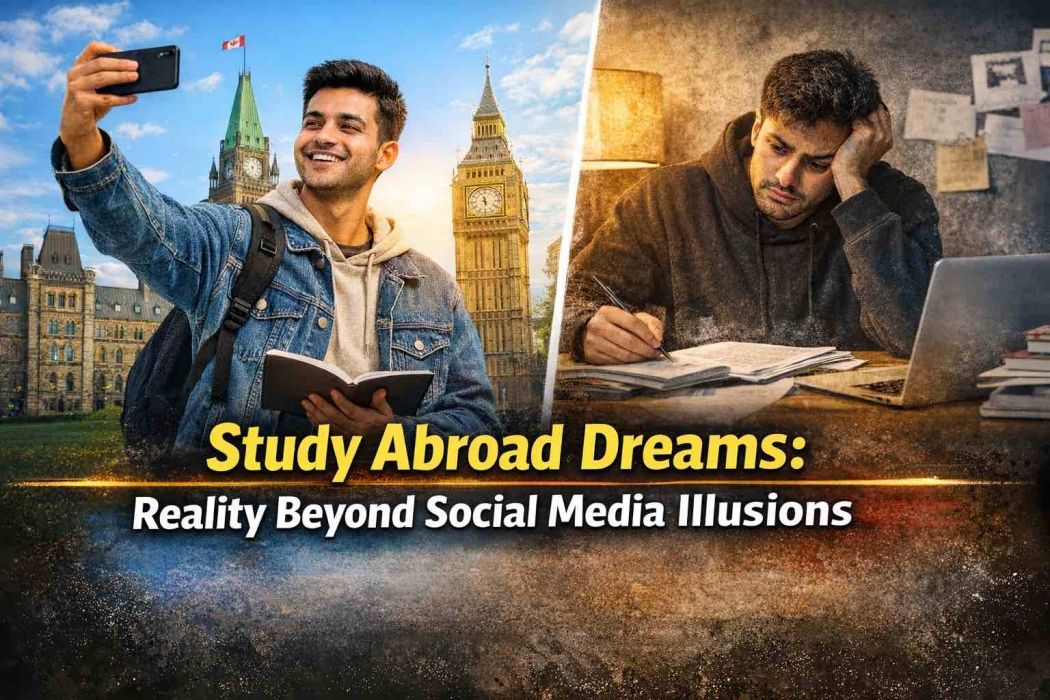
In North Indian families, it symbolises aspiration, family pride, and the promise of global success. Every year, young students leave cities like Jalandhar, Ludhiana, Chandigarh, and Amritsar, as well as small towns across North India, carrying dreams shaped by social media stories and peer influence. Yet, after guiding students for more than two decades in overseas education, I have realised that the biggest challenge today is not obtaining admission or a visa. The real challenge lies in understanding the difference between social media imagination and the reality of international education.
Social Media and the Creation of Aspirational Narratives
Platforms such as Instagram, YouTube, and short-video applications have dramatically changed how students perceive life abroad. Daily exposure to visually appealing campus tours, luxury accommodations, travel experiences, and celebratory graduation posts creates an impression that studying abroad automatically leads to financial independence and lifestyle transformation. From my own professional experience, I increasingly observe students arriving with decisions already influenced by online narratives rather than academic research. Many believe that choosing a popular destination guarantees settlement or employment because social media portrays success stories far more frequently than struggles.
Social media rarely captures the silent realities — the long winter evenings of homesickness, financial stress, academic pressure, or the discipline required to survive independently in a foreign environment. The digital world presents outcomes, not journeys.
The Statistical Reality Behind Overseas Education Trends
Recent global trends reveal that the study abroad landscape is undergoing significant correction. Government figures indicate that the number of Indian students travelling abroad for higher education declined from approximately 9.08 lakh in 2023 to around 6.26 lakh in 2025. Rising tuition costs, stricter immigration policies, currency fluctuations, and changing labour market conditions have contributed to this shift.
Countries that once appeared easily accessible are now implementing tighter visa regulations and compliance systems. Canada has strengthened admission verification procedures, the United Kingdom has introduced restrictions affecting dependent visas, and visa processing timelines in the United States have become increasingly competitive. These developments demonstrate that international education policies evolve continuously, often independent of online popularity trends.
Financial Commitments and Family Expectations
Perhaps the most underestimated aspect of overseas education is financial responsibility. Studies estimate that Indian families collectively spend nearly USD 70 billion annually on international education, including tuition fees, accommodation, insurance, and living expenses. For many households, this investment represents years of savings or educational loans carrying long-term repayment obligations.
Students frequently assume that part-time employment abroad will comfortably support their expenses. In practice, permitted working hours generally cover daily living costs rather than academic fees. I have often counselled families that financial planning must precede destination selection, because sustainability abroad determines whether education becomes an opportunity or a burden. When expectations are shaped by realism rather than assumption, students adapt far more successfully.
Academic Adjustment and Emotional Transition
Another contrast between perception and reality lies within academic culture itself. Universities abroad emphasise independent learning, analytical thinking, research methodology, and strict standards of academic integrity. Students must manage assignments, deadlines, employment responsibilities, and personal life simultaneously without constant supervision.
The transition from familiar social structures in India to individual responsibility abroad can be emotionally demanding. Feelings of isolation, cultural adjustment challenges, and performance anxiety are common during the initial months. These experiences seldom appear in celebratory online posts, yet they form an essential part of international education.
Over the years, I have noticed that students who approach overseas education as a serious academic commitment rather than a lifestyle upgrade ultimately achieve stronger professional outcomes.
Changing Choices and Emerging Maturity Among Students
Encouragingly, a noticeable transformation is taking place among Indian students. While traditional destinations such as Canada, the United States, the United Kingdom, and Australia remain popular, an increasing number are exploring countries like Germany, France, Ireland, Malta, Latvia, Finland, and Dubai due to affordability and industry alignment.
France, for example, has announced an ambitious plan to host 30,000 Indian students by 2030, expanding English-medium programmes and simplifying visa pathways. Such developments reflect a growing awareness among students, who now evaluate return on investment, employability prospects, and long-term career stability rather than merely following trends. This shift represents the emergence of a more informed and strategically thinking generation.
Dreams, Awareness, and Responsible Decision-Making
The dream of studying abroad remains valid and inspiring. International education expands perspectives, builds independence, and connects Indian youth with global opportunities. However, dreams achieve meaning only when supported by awareness. Social media may inspire the decision, but informed guidance sustains the journey. The true story of overseas education begins after arrival — in classrooms, workplaces, and everyday challenges that shape maturity and resilience. For Indian students today, the choice is not between dream and reality but between illusion and preparation. When ambition meets accurate information and professional guidance, studying abroad becomes not merely a trend but a life-changing transformation.
References
- Ministry of External Affairs, Government of India – Indian Students Abroad Data (2025)
- ICEF Monitor Reports on Global Student Mobility Trends
- OECD International Education Outlook Reports
- Indian Express Education Statistics on Overseas Students
- Professional observations based on over two decades of overseas education consultancy experience
Williamstown Beach: where my heart takes me

Explore the beauty of Williamstown Beach in Melbourne—perfect for sunsets, coastal walks, swimming, and relaxing day trips. Discover top attractions, travel tips, cafes, history, and the best time to visit this stunning seaside destination.


No Comment