Updated on June 10th, 2026
In an age where instant success stories dominate social media and people are constantly searching for shortcuts to happiness, wealth, or recognition, the wisdom of Jim Rohn feels more relevant than ever. Rohn did not believe in lucky breaks or sudden miracles. Instead, he viewed life as a carefully constructed building—one shaped patiently through discipline, decisions, and deliberate changes.
His famous belief that life does not get better by chance; it gets better by change continues to resonate because it shifts responsibility back to the individual. Rather than waiting for favourable circumstances, Rohn encouraged people to become active participants in shaping their destiny. According to him, progress is never accidental; it is always intentional.
Man behind Philosophy of Change
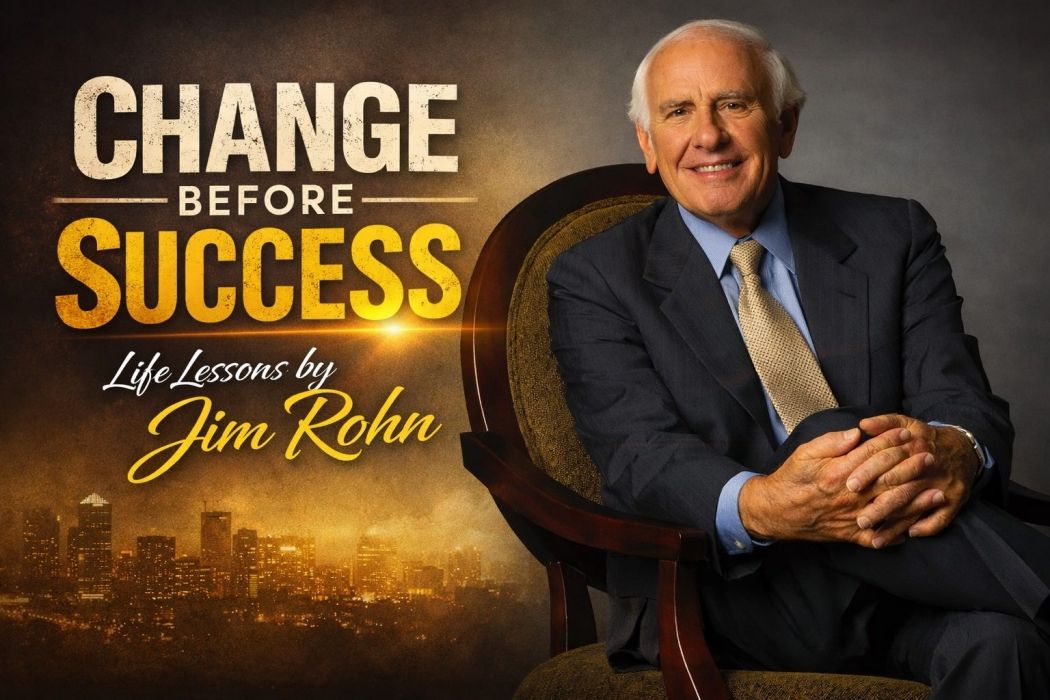
Jim Rohn was an American entrepreneur and author, and one of the most influential motivational speakers in the field of personal development in the late twentieth century. He is widely regarded as a pioneer of modern self-improvement philosophy and business motivation.
Born on September 17, 1930, in Idaho, USA, Rohn grew up in modest circumstances and initially struggled financially in his early adult life. His turning point came when he met his mentor, entrepreneur Earl Shoaff, who introduced him to the principles of personal responsibility, goal setting, disciplined thinking, and lifelong learning. These ideas transformed Rohn’s life and eventually shaped his teaching career.
Jim Rohn became famous for his simple yet powerful philosophy: success is not something you pursue; it is something you attract by becoming a better person. His seminars focused on mindset, leadership, wealth creation, communication skills, and personal discipline. Unlike highly theatrical motivational speakers, Rohn’s style was calm, practical, and deeply philosophical, making his lessons timeless.
Over his career, he delivered thousands of lectures worldwide and authored influential books such as The Art of Exceptional Living and Seven Strategies for Wealth and Happiness. His teachings influenced many globally recognised success coaches and entrepreneurs, including Tony Robbins, who often acknowledged Rohn as an early mentor.
The Myth of luck and the power of choice
Modern society often romanticises luck. People hope for the right opportunity, the perfect timing, or an external rescue from difficult situations. Rohn firmly rejected this mindset. He believed that waiting rarely changes outcomes because life rewards action, not wishful thinking.
If daily habits remain unchanged, results remain predictable. Real transformation begins when individuals take ownership of their choices. Improvement, Rohn explained, is not something that happens to us—it happens because of us.
This shift from blame to responsibility marks the beginning of growth. When a person stops asking why life is unfair and starts asking how they can improve themselves, they move from being victims of circumstance to architects of possibility.
Success is attracted, not chased
One of Rohn’s most profound contributions to personal development was his idea that success is not something to chase endlessly. Instead, it is attracted through self-improvement. This philosophy redirects attention inward rather than outward.
Rohn famously advised people to work harder on themselves than on their jobs. The reasoning was simple yet powerful. When knowledge expands, discipline strengthens, and character deepens, opportunities begin to appear naturally. Employers value competence, businesses reward reliability, and relationships flourish around integrity.
Rohn believed strongly that personal development is the foundation of professional success. His famous quotes—such as “Work harder on yourself than you do on your job” and “Your life does not get better by chance, it gets better by change”—continue to guide individuals seeking growth in their careers, businesses, and personal lives.
The compounding effect of small habits
Unlike motivational approaches that promise dramatic reinvention, Rohn believed in gradual transformation. He understood that lasting success grows from small, consistent actions repeated over time.
Reading a few pages daily, learning a new skill, improving communication, or managing time more wisely may seem insignificant in isolation. Yet these habits accumulate quietly, shaping long-term outcomes. Discipline, in Rohn’s philosophy, acts as the bridge between dreams and achievement.
Life mirrors this principle everywhere. Health declines slowly through neglect, and prosperity grows slowly through consistent effort. The small choices made each day ultimately determine the direction of one’s future. What appears minor today often becomes decisive tomorrow.
Mastering response over circumstance
Another cornerstone of Rohn’s teaching lies in understanding human response. Life inevitably presents setbacks—economic challenges, professional disappointments, or personal struggles. External events remain beyond complete control.
However, Rohn insisted that the response remains entirely within personal control. Two individuals may face identical challenges yet produce vastly different outcomes depending on their reactions. Responsibility, therefore, becomes empowering rather than burdensome.
When individuals accept ownership of their responses, excuses lose power. Problems become lessons, failures transform into experience, and adversity strengthens resilience. Growth begins not when circumstances improve, but when perspective changes.
A Life Built by Deliberate Design
The enduring legacy of Jim Rohn is not merely motivational—it is architectural. He invited people to see their lives as structures under constant construction. Every decision lays a foundation, every habit forms a pillar, and every disciplined action strengthens the framework of the future.
True change rarely announces itself dramatically. It appears quietly in improved thinking, better choices, and consistent effort sustained over time. The miracle people often seek is simply the accumulated result of disciplined living.
In a world fascinated by sudden success, Rohn’s message remains refreshingly grounded: if we wish for life to improve, we must first improve ourselves. Better outcomes are not accidents; they are designed realities shaped through conscious action.
The future, therefore, is not something that happens by chance. It is something patiently built—day by day, decision by decision—by those willing to embrace change and become the architects of their own lives.
A Timeless call for personal change
Even years after his passing in 2009, Jim Rohn’s philosophy continues to influence entrepreneurs, leaders, and thinkers worldwide. His legacy endures because it speaks to a universal truth: lasting improvement begins within.
In an era obsessed with speed and shortcuts, Rohn’s message feels both grounding and liberating. The future is not governed by chance or destiny alone. It is shaped by learning, discipline, mindset, and consistent action.
If we desire better results, we must become better individuals. If we wish for progress, we must initiate change ourselves. Life, as Rohn taught, is not a lottery to be won but a structure to be built—patiently, consciously, and purposefully—one decision at a time.
William Wordsworth’s Timeless Lesson for a Noisy World

Explore William Wordsworth’s insight on wisdom, humility, and the beauty of simple living in a rushed world.


No Comment