Updated on January 25th, 2026
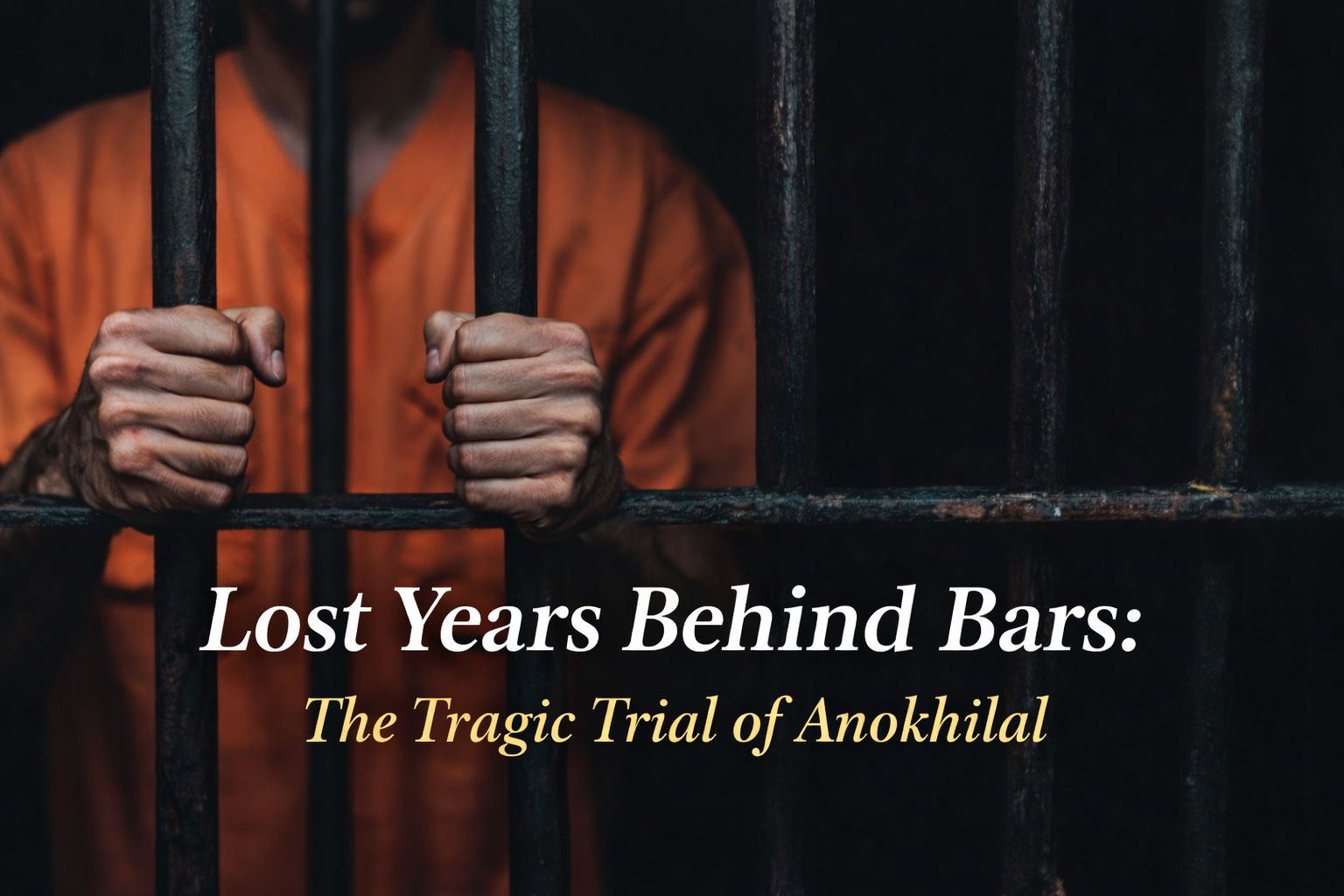
The trial story of Anokhilal, a man from Madhya Pradesh, is a chilling testament to the grave injustices that can occur within the legal system. The Trial of Anokhilal, wrongly convicted of raping and murdering a nine-year-old girl, faced the death penalty twice before finally being acquitted after 11 long years in prison. This case not only highlights the inefficiencies and flaws of the Indian legal system but also raises profound questions about justice, accountability, and the rights of the accused.
The Beginning of an Ordeal
In 2013, when Anokhilal was just 21 years old, a special court in Khandwa district found him guilty of a heinous crime based on inadequate evidence and a rushed trial that lasted less than two weeks. The court handed down a death sentence, a decision that was upheld by the Madhya Pradesh High Court just months later. As Justice Krishna Iyer famously said, “A fair trial is a part of the right to life under Article 21.” Yet, Anokhilal was denied this fundamental right, facing a grim future with no clarity in his fate.
Anokhilal spent the next six years in fear, the chilling reality of his potential hanging always looming, a psychological burden he could barely bear. The legal maxim “Innocent until proven guilty” echoed as a cruel irony, as he was trapped in a system that disregarded it.
The Supreme Court Intervention
In 2019, Anokhilal’s case reached the Supreme Court, which ruled that he had not received proper legal representation during his initial trial. This ruling underscored the importance of competent legal counsel, a cornerstone of any fair judicial process. In 2019, Anokhilal’s case reached the Supreme Court, which held that he had not received proper legal representation during his initial trial. The Court underscored the importance of competent legal counsel as a cornerstone of a judicial process and emphasized that “the right to legal representation is fundamental at stage of criminal proceedings.” This ruling paved the way for a retrial, though Anokhilal had to endure four more years before the Khandwa court revisited his case.
A Second Death Sentence
Despite the Supreme Court’s intervention, the retrial in 2023 resulted in yet another conviction and death sentence for Anokhilal. The trauma of being sentenced to death not once, but twice, is unimaginable. The legal system, which should protect the innocent, had failed him again. As the philosopher Jeremy Bentham noted, “It is better to prevent the guilty from escaping than to punish the innocent.” Yet, in Anokhilal’s case, the system did neither.
Turning the Tide
The tide began to turn when the Madhya Pradesh High Court ordered yet another retrial. This time, the court pointed out that the prosecution had failed to examine the expert who prepared the DNA report—central to the conviction—thereby leaving a significant gap in its case. In March 2024, a team of lawyers from Project 39A, a legal reforms advocacy group, took up Anokhi Lal’s case. Their thorough investigation revealed critical flaws in the original trial involving the Trial of Anokhilal.
During the cross-examination, the DNA expert confirmed that Anokhi Lal’s DNA did not match the victim’s, a revelation that shifted the case in his favour. Further, it emerged that the witness who claimed to have seen Anokhilal with the victim had seen them together more than 36 hours before the crime—a timeframe too long to implicate him in the rape and murder.
The Flaws of the System
The court also scrutinized the police procedures surrounding the evidence collection. How hair strands allegedly found in the victim’s hands were seized and sealed was questionable. The Trial of Anokhilal shows that a young vagrant had become a convenient scapegoat for a crime that had shocked the community.
In 2023, Anokhilal was finally acquitted by the same judge who had previously sentenced him to death. However, this acquittal did not erase the years of suffering he had endured. The legal principle “Justice delayed is justice denied” resonates deeply in this context, as the system failed not only Anokhilal but also the family of the nine-year-old girl, who have yet to see justice served for their loss despite the conclusion of the Trial of Anokhilal.
The Unanswered Questions
Despite Anokhilal’s exoneration, the case leaves a haunting question: who truly committed the crime? The family of the victim is still left without answers, a painful reminder of the failures at every level of the justice system—from the police to forensic experts to the judiciary. As Justice Ranjan Gogoi stated, “The law must be a shield for the innocent and a sword for the guilty.”
A Call for Reform
The appalling fact remains that Anokhilal will not receive any compensation for the years lost to wrongful incarceration. India’s legal system has flaws, and court verdicts often highlight these issues, but the system shows a troubling lack of compassion for the wronged. The absence of a robust mechanism for compensating the wrongfully convicted underscores the urgent need for reform.
Anokhilal’s story and the Trial of Anokhilal serve as a stark reminder of the urgent need to address the systemic flaws within India’s criminal justice system. The story demands a collective effort to ensure the protection of the accused’s rights and prevent the innocent from suffering due to incompetence and negligence. We must advocate for a justice system that is both fair and compassionate, ensuring that such injustices never happen again as we reflect on this tragic tale.
Reference: ANOKHILAL vs. STATE OF MADHYA PRADESH
Master’s in Tourism and Recreation (M.A.) at EIIET Berlin

Master’s in Tourism and Recreation program, offered by the esteemed Institute of Berlin (EIIET) in partnership with the University of Tourism and Hotel Management (WSTiH). This intensive two-year postgraduate course meticulously equips ambitious students with the advanced skills and knowledge to position themselves as financial and strategic leaders in the ever-evolving tourism industry.


No Comment