Updated on December 18th, 2025
I visited Australia and Melbourne many times in the last ten years, but I spent so many days in Melbourne during my first visit. This city is one of my favourite cities I have ever visited. The reason behind all my visits was mixed. Visiting campuses of a few colleges and universities was also one reason, as I have a profession related to it. But as a whole, I spent my days on long vacations, as I visited almost every known place in Melbourne. Every time, I felt Melbourne was one of the best places to be. There are so many beautiful places around Melbourne.

Living with Melbourne’s Railways: From Ashburton to the City’s Heart
During my first visit to Melbourne, Ashburton on Warrigal Road was the area where I stayed. Its proximity to Holmesglen Railway Station made travelling across the city remarkably convenient. I used this station many times while exploring different parts of Melbourne, experiencing firsthand how efficient, reliable, and well-connected the city’s public transport system truly is.
Melbourne’s metro rail network, with 16 train lines originating from Flinders Street Station and passing through over 200 stations, functions as the lifeline of the city. At the heart of this network stands Flinders Street Station, located at the iconic intersection of Swanston Street and Queen Street. Widely regarded as the heart of Melbourne, this historic station is one of the city’s most recognisable landmarks.
Built in 1854, Flinders Street Station holds immense historical significance as Australia’s first railway station. Its timeless architecture reflects Melbourne’s rich heritage, while the nearby Yarra River adds a layer of scenic charm, making the area a must-visit for anyone exploring the city.
Under the Clock: Where Melbourne Comes Alive
“I will meet you under the clock” is a phrase every Melburnian understands instantly. It refers to the iconic row of clocks above the main entrance of Flinders Street Station—a timeless symbol of connection, anticipation, and shared moments. Positioned at the city’s very centre, it has naturally become Melbourne’s most loved meeting point, where stories begin and journeys quietly unfold.
The streets flowing out from here—Swanston, Elizabeth, Collins, and Queen Street—are always alive with movement. Trams glide past, street musicians colour the air with rhythm, cafés hum with conversations, and the crowd itself feels like a living mosaic of cultures and dreams. Time seems to slow down even as life rushes forward.
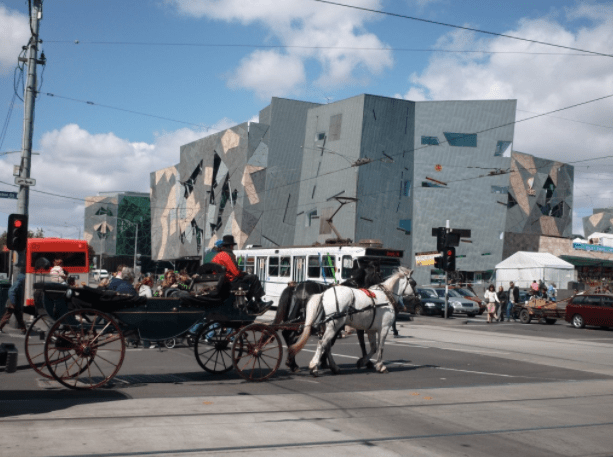
Closely connected to this vibrant zone is Federation Square, another landmark near Flinders Street Station. Open 24 hours a day, 365 days a year, it serves as both a meeting place and a cultural hub. Managed by Fed Square Pty Ltd, a company wholly owned by the Victorian Government, the square reflects Melbourne’s multicultural identity through year-round festivals and celebrations, including the national days of countries from across the globe.
To stand under the clock is not just to wait for someone—it is to stand at the very pulse of Melbourne itself.
Melbourne on Foot: From Skylines to Sea Life

The first day, I planned to visit some important places. Melbourne’s Aquarium, Parliament House, Eureka Skydeck, and Crown Casino were at the top of my list of sites. All these sites are in the central city, within walking distance of each other. Melbourne Aquarium is on the Yarra River. It is the world’s only Southern Ocean aquarium, housing a Great Barrier Reef exhibit, Giant Southern Crabs, Japanese spider crabs, clownfish, jellyfish galore, sea turtles, and grey nurse sharks. Walk along the glass tunnel and watch the underwater world swim around you! Watching the sharks around is a fantastic experience. You feel like walking through the ocean, looking at sea life. It’s a beautiful place to spend your day. No wonder if I say that no trip to Melbourne is complete without visiting Melbourne Aquarium.
Shrine of Remembrance: A Walk Through History
The Shrine of Remembrance, Victoria’s National War Memorial, is a remarkable place just a short walk from Flinders Street Station. Another remarkable place within easy walking distance from Flinders Street Station is the Shrine of Remembrance, officially known as the National War Memorial of Victoria. Standing with quiet dignity, it is not only Australia’s largest war memorial but also one of Melbourne’s most significant landmarks.
Opened in 1934, the Shrine of Remembrance honours the brave men and women who served Australia in World War I and subsequent conflicts. More than a historical monument, the Shrine is a place of reflection, gratitude, and national pride. Each year, it becomes the heart of remembrance during ANZAC Day and Remembrance Day ceremonies, when the nation pauses to honour the sacrifices made by its countrymen for peace and freedom.
Beyond its emotional significance, the Shrine also offers a visual reward. The upper balcony provides panoramic views of Melbourne’s skyline, the surrounding gardens, and the Yarra River precinct, making it one of the best vantage points in the city. The peaceful atmosphere, combined with its architectural grandeur, leaves a lasting impression on every visitor.
In brief, the Shrine of Remembrance is not just a monument—it is an experience. If you are exploring Melbourne city attractions, this iconic memorial is a must-visit destination that beautifully blends history, emotion, and breathtaking views.
Melbourne Moments: Weather, Walks, Food, and Freedom

One of the greatest pleasures in Melbourne is simply being outdoors. Even in June and July, the city feels inviting—perfect for wandering without plans. A day may drift from city streets to shopping arcades, from quiet moments by the Yarra River to flavours of Chinese, Italian, Indonesian, and Indian cuisines. The rhythm of life feels easy, unforced.
The beaches add their own calm. Walking along the sand, letting water touch your feet, watching the sky change colours—Williamstown and St Kilda became my favourite places to pause and breathe.
When the city feels too familiar, the roads beyond Melbourne offer deeper beauty. Fresh air and open landscapes await at Mount Buller, Phillip Island, the Great Ocean Road, the Dandenong Ranges, Sovereign Hill in Ballarat, and the wild stretches of Grampians National Park.
Melbourne teaches you one thing gently—step outside, and life feels lighter.
Ballarat & Sovereign Hills gold mines

One day, we planned to visit Ballarat and Sovereign Hills gold mines. It is situated 110 km northwest of Melbourne. The day we went there, it was cloudy with drizzling at brief intervals. The way to Ballarat from Melbourne passes through beautiful landscapes and breathtaking scenery. Wines, yards, and green hilly slopes create a soothing effect on you. At Ballarat, you will get a recreated environment of 1850s gold mining. The discovery of gold in the 1850s is the most significant event in the state’s evolution. Even now, you can try your luck and pan for gold in the water and sand flowing there. You can wander through colonial buildings and feel the atmosphere of a bygone era. Continue reading more beautiful places around Melbourne
Initially written in 2010, so dates belong to that year.
Master’s in Tourism and Recreation (M.A.) at EIIET Berlin

Master’s in Tourism and Recreation program, offered by the esteemed Institute of Berlin (EIIET) in partnership with the University of Tourism and Hotel Management (WSTiH). This intensive two-year postgraduate course meticulously equips ambitious students with the advanced skills and knowledge to position themselves as financial and strategic leaders in the ever-evolving tourism industry.


No Comment