Updated on January 10th, 2026
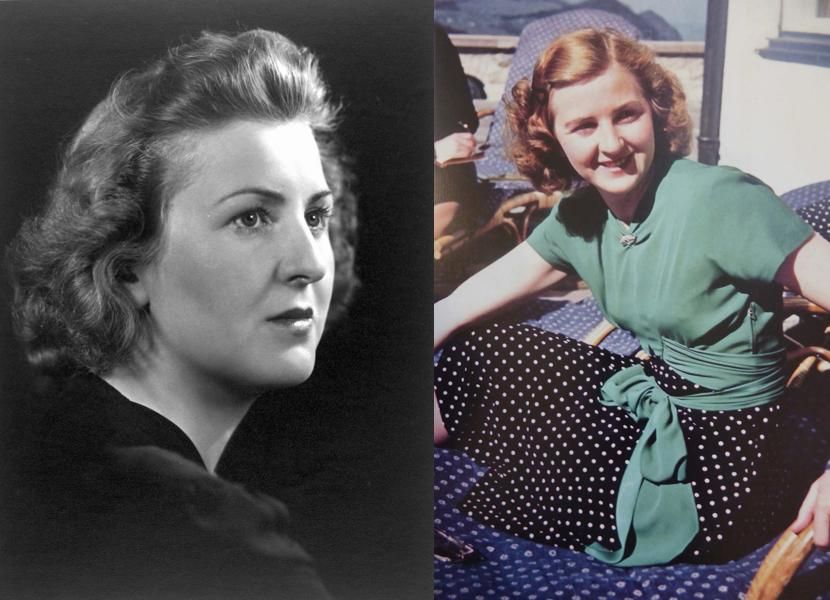
Historians have long portrayed Eva Braun as a shadowy figure at the edge of Nazi Germany’s political landscape—primarily remembering her as Adolf Hitler’s companion and, briefly, his wife. But modern readers and researchers have evolved from post-war portrayals of Braun as an “apolitical dumb blonde” to a more nuanced understanding of her as a loyal, committed Nazi ideologue and an active, albeit private, participant in Hitler’s inner circle.
The Traditional View: Eva Braun as Apolitical
Most authoritative historians—including Ian Kershaw, Joachim Fest, and Brigitte Hamann—maintain that Eva Braun had little to no political involvement. Their writings highlight that she was kept away from government meetings. Her focus was photography, style, films, and personal hobbies. Her letters and diary entries rarely mention ideology or political views.
Kershaw famously described her as “marginal to Hitler’s political life,” while Joachim Fest, a prominent German historian and biographer, wrote she was “deliberately kept in the background, unfamiliar with political affairs.”
Political Insight or Proximity Advantage? A Fresh Counter-Perspective
A minority of political writers argue that anyone living in the private circle of a dictator inevitably develops political awareness. Drawing on political theorist Hannah Arendt’s ideas about totalitarian systems, some scholars suggest that the boundary between public and private power becomes blurred in authoritarian households.
Historian Heike Görtemaker, author of Eva Braun: Life with Hitler, challenges the older belief that Braun was naïve or ignorant. She writes that Braun understood the political environment she lived in. She managed aspects of Hitler’s private world. According to Görtemaker, while Braun was not an influencer of policy, she was far from clueless, possessing a basic understanding of the political forces shaping her world.
Influence Behind the Curtain: The Domestic Power Structure
Several sociopolitical writers studying dictatorships note that the partners of authoritarian leaders often wield informal influence, even if unintentionally. This influence is not strategic but emotional or environmental.
Eva Braun was influential in shaping the personal atmosphere around Hitler. Historians like Catherine Merridale argue that such domestic influence can indirectly shape political moods and decisions. Even though it wasn’t “power” in the formal sense, we can interpret this insight into Hitler’s private moods and vulnerabilities as a form of political awareness.
Diary Entries & Letters: Hints of Awareness
Braun’s surviving materials—diaries, letters, and photographs—offer glimpses into her understanding of the regime: In her writings, she wrote about Allied bombings and expressed anxiety over Hitler’s long war meetings. Political researcher Bradley F. Smith noted that Braun sometimes understood Hitler’s emotional state “better than the generals who served him,” suggesting she possessed an intimate understanding of how politics affected his private behavior. While this does not prove she had political expertise, it does contradict the idea that she was completely unaware.
Modern views contradict the view
Modern commentators challenge the old claim that Braun was merely an innocent bystander. A person who lives at the heart of a brutal regime yet chooses detachment still holds responsibility. The argument positions Braun not as a political actor but as a deliberate participant in Hitler’s private world.
A shadowed figure with a more complex story
Historians and political writers cannot dismiss Eva Braun as merely Hitler’s companion, nor elevate her into a secret political mastermind. The truth—supported by historians and political writers—is more layered. She lived within the core of a totalitarian regime, aware of its workings but choosing the safety of silence and personal loyalty over active involvement.
William Wordsworth’s Timeless Lesson for a Noisy World

Explore William Wordsworth’s insight on wisdom, humility, and the beauty of simple living in a rushed world.


No Comment