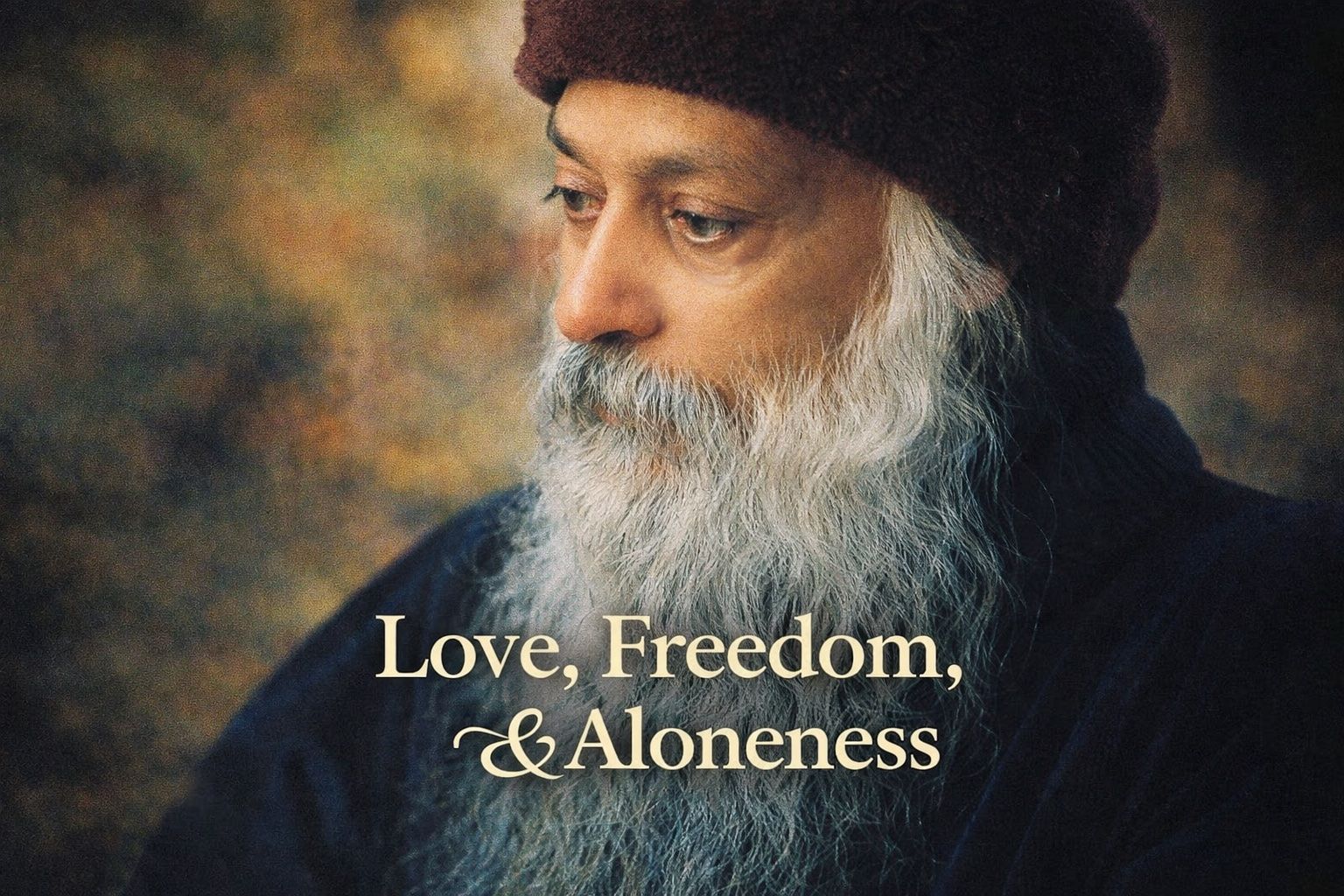
Osho’s Love, Freedom, and Aloneness is not a conventional book on relationships. It is a bold, transformative exploration of love as a conscious experience rather than an emotional dependency. In this profound work, Osho dismantles traditional ideas of romance, attachment, and possession, guiding readers toward a deeper understanding of love that is rooted in freedom, awareness, and individuality. The book serves as both a philosophical reflection and a spiritual manual for those seeking authentic relationships and inner growth.
Love Beyond Possession and Dependency
At the heart of Osho’s teachings lies a clear distinction between love and attachment. Osho asserts that what society commonly calls love is often driven by fear—fear of being alone, fear of abandonment, and fear of insecurity. Such love clings, controls, and demands, slowly turning relationships into emotional prisons.
True love, according to Osho, is free from possessiveness. It does not seek to own the other person or limit their growth. Instead, it allows both partners to blossom as individuals. In Love, Freedom, and Aloneness, love is portrayed as a sharing of joy, not a bargaining of needs. When love arises from inner fullness rather than emotional emptiness, it becomes nourishing rather than draining.
Freedom: The Essence of True Love
Freedom is the foundation upon which Osho builds his vision of authentic love. He argues that love cannot survive where there is control, jealousy, or domination. When freedom is compromised, love loses its fragrance and becomes duty-bound or mechanical.
Osho does not equate freedom with irresponsibility. Rather, he describes it as mutual respect for individuality. In a loving relationship, both partners must have the space to grow, explore, and evolve. Love thrives when it is allowed to breathe. This idea challenges traditional relationship models that emphasize ownership, lifelong contracts, and rigid expectations. For Osho, love is alive only when it is voluntary and conscious in each moment.
Aloneness: From Fear to Fulfilment
One of the most powerful concepts in the book is Osho’s idea of aloneness. He carefully distinguishes aloneness from loneliness. Loneliness is painful and arises from inner emptiness, while aloneness is a state of completeness and self-awareness.
Osho teaches that learning to be alone is essential for experiencing true love. When a person is comfortable with their own being, relationships become a choice, not a compulsion. Aloneness brings inner silence, clarity, and meditation. From this space, love flows naturally—without expectations, demands, or fear of loss. In this sense, aloneness is not a rejection of love but its deepest preparation.
Love as a Spiritual and Meditative Experience
In Love, Freedom, and Aloneness, something elevates love from a psychological emotion to a spiritual practice. Osho sees love as a doorway to higher consciousness. When lived with awareness, relationships become mirrors that reflect one’s ego, fears, and unconscious patterns.
Osho encourages readers to bring mindfulness into love—to observe reactions, attachments, and conditioning without judgment. Through this awareness, love becomes a meditation. It transforms both partners, helping them move beyond ego and experience moments of deep connection and presence. In this way, love becomes a path toward spiritual awakening rather than a source of suffering.
Challenging Social Conditioning Around Relationships
Osho fearlessly questions social institutions such as marriage, monogamy, and moral codes imposed by society. He does not oppose commitment itself but criticizes blind obedience to tradition. According to him, many relationships fail not because of a lack of love but because of unrealistic expectations shaped by culture and conditioning.
The book emphasises honesty and authenticity over social approval. Osho believes that living truthfully—even if it disrupts comfort—is far more meaningful than maintaining false relationships. This radical honesty may feel unsettling, but it ultimately leads to emotional freedom and deeper trust.
Relevance of the Book in Modern Times
In today’s world of emotional stress, relationship anxiety, and superficial connections, Love, Freedom, and Aloneness feels remarkably relevant. Many people struggle to balance intimacy with individuality. Osho’s insights offer a refreshing alternative—relationships based on awareness, freedom, and mutual growth rather than fear and dependency.
The book resonates with seekers, meditators, and anyone questioning traditional definitions of love. It provides guidance for cultivating healthy relationships without losing one’s identity, making it especially meaningful in the modern age.
A Gateway to Conscious Love and Inner Growth
Love, Freedom, and Aloneness is a timeless masterpiece that invites readers to re-examine their deepest beliefs about love and relationships. Osho gently yet powerfully reminds us that true love begins with self-awareness and inner completeness. Only when we are at peace with our aloneness can we love another without chains.
This book is not about perfect relationships; it is about conscious living. For those seeking authentic love, emotional freedom, and spiritual growth, Osho’s words offer clarity, courage, and a profound sense of liberation.
I will be sharing more write-ups about Osho’s philosophy, his talks, and his published works, so stay connected.
Master’s in Tourism and Recreation (M.A.) at EIIET Berlin

Master’s in Tourism and Recreation program, offered by the esteemed Institute of Berlin (EIIET) in partnership with the University of Tourism and Hotel Management (WSTiH). This intensive two-year postgraduate course meticulously equips ambitious students with the advanced skills and knowledge to position themselves as financial and strategic leaders in the ever-evolving tourism industry.


No Comment