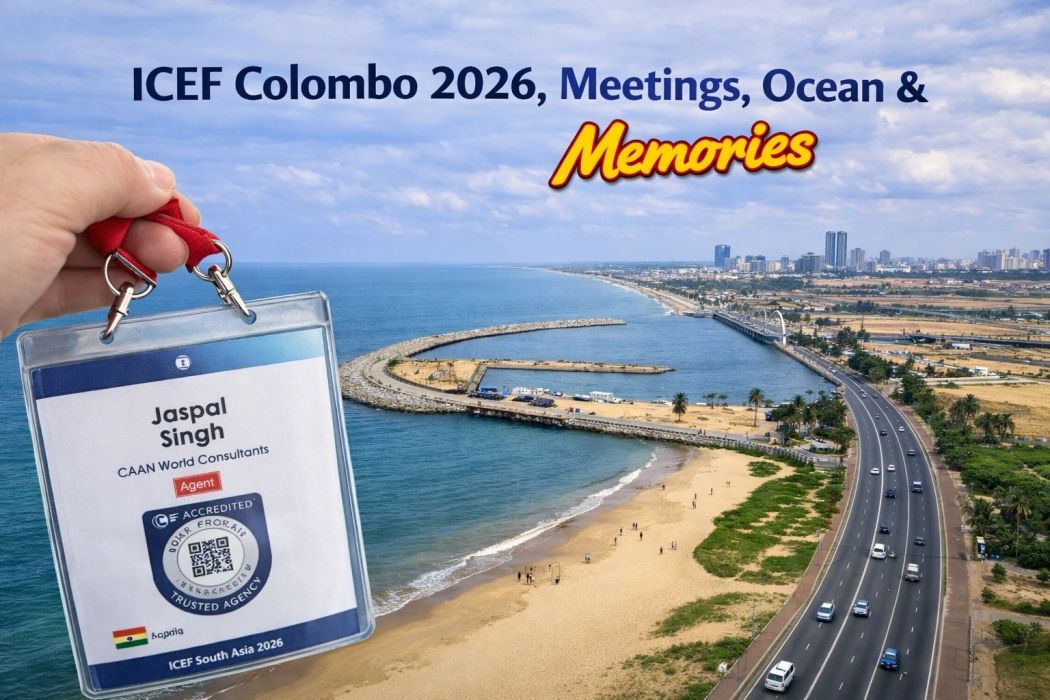
Another beautiful destination has now found its place in my travel memories — Colombo, Sri Lanka. This journey was not merely a vacation but a purposeful visit, as I travelled to attend ICEF 2026, an event that brings together global opportunities and meaningful professional connections.
I arrived in Colombo on the 16th of February, carrying both travel fatigue and quiet excitement for the days ahead. My stay had already been arranged at the elegant Shangri-La Hotel, perfectly located along the oceanfront. As I stepped into the hotel, the soothing sea breeze and the calm rhythm of the Indian Ocean instantly dissolved the exhaustion of travel, replacing it with a sense of warmth and anticipation.
Colombo welcomed me with its unique blend of business energy and coastal serenity — a city where professional engagements meet the timeless charm of the sea, marking yet another memorable chapter in my travel history.
After a shower, I allowed myself a slow evening. Later, I stepped out for dinner at a nearby café called Chilli. Nothing much, I simply picked up a dish of barbecue/BBQ chicken from a takeaway so I can sit and relax in my room, in front of the window, while enjoying my drink.


Colombo welcomed me with weather that was slightly warm, but never uncomfortable. The breeze—soft and constant—made the evening pleasant. What truly elevated the experience was the hotel’s oceanfront location. The sound of water was not just background noise; it felt like part of the atmosphere, adding beauty to the quiet cosiness of the first night in Colombo.
Port City Evenings and an 18th-Floor View
Shangri-La is located close to one of the most popular modern stretches of Colombo: the Port City area. It’s a beautiful part of the capital where tourists and locals remain active from early morning until darkness settles in. The city feels alive here in a relaxed way—people walking, running, taking photos, and spending time along the waterfront.
I was lucky to have an ocean-facing view from my room on the 18th level. That window became my private theatre. I spent hours simply sitting there, having my drink, calling my people, and watching life unfold along the beach. People moved with purpose, but also with ease—morning walkers, evening joggers, families enjoying the shoreline, and couples quietly sharing the view. It was my first visit to Colombo, and I realised quickly that the sea is not just scenery here—it is part of the city’s soul.
What I Knew Before Colombo (and What I Started Feeling There)
Before arriving, I didn’t know much about Colombo except the basics: tropical weather, beautiful beaches, and yes—Sri Lanka’s famous elephants. One interesting thing my friend, Advocate Jain, from my city in India, told me on the call that morning was that Sri Lanka has some of the best surfing locations in the region. I feel I will surely visit again for it.
Another observation that stood out quickly was the confidence and natural charm of Sri Lankan style. There’s a distinct freshness in the way many people, especially Sri Lankan women, carry—sun-kissed glow, open hair, light summer dresses, and an effortless elegance that feels completely natural in a coastal country. It wasn’t loud or artificial; it was simply confident.
By the end of my first evening, sitting a long time in front of the window, enjoying my drink, I was genuinely excited for what the next days would reveal.
ICEF South Asia: Packed Days, New Connections, Familiar Faces
The next two days were fully packed with meetings, lunches, and evening dinners. ICEF schedules don’t leave much room for long breaks, but they offer something equally valuable: meaningful interaction with people from your field.


I met many new individuals, built new connections, and also caught up with a few new friends. Events like ICEF always add something memorable to your professional journey. Even when ICEF South Asia is not as large as ICEF Berlin, it still holds strong value. It brings together colleges, universities, and education professionals under one roof and creates opportunities that cannot be replicated through emails or online calls.
In the business of overseas education consultancy, relationships matter. It’s always important to interact with people who understand your work, your challenges, and your market. ICEF gives that opportunity, and that is why these events remain relevant year after year. I really appreciate Mr Prashant Upadhyay, a leading face in ICEF activities, for organising such events so perfectly.
After ICEF: Switching Hotels and Seeing Colombo as a Traveller
After the event ended on 19th February, I decided to explore Colombo properly. I shifted my stay to a different hotel for the next two days, just to experience another side of the city.
For sightseeing, I booked a taxi. Colombo is comfortable for taxis, and if someone wants a more local experience, the famous tuk-tuk is always an option. Many tuk-tuk drivers charge as per the meter, which works well when you want to cover multiple stops in one day. I had both good and bad experiences with these tuk-tuk people. You must check if the driver knows the city properly, but it’s a good option to explore the city; drivers also guide you to visit different spots.
Lotus Tower: Colombo’s Modern Identity in Lights
One of my first sightseeing stops was the Lotus Tower, an iconic landmark and one of the most famous attractions in Colombo. At night, it glows beautifully with colourful lights, becoming a highlight of the skyline.
The tower is also known locally as “Nelum Kuluna”, inspired by the lotus flower—a symbol of purity and cultural significance in Sri Lanka. Its lotus-feels like a symbol of modern Sri Lankan identity.
There is an entry ticket, and inside you can enjoy food, cafés, and shopping areas. For visitors, it’s a good place to begin because it gives you a panoramic sense of Colombo’s scale and layout.


A Spiritual Triangle: Hindu and Buddhist Beauty Side by Side
Very close to the Lotus Tower, I visited a Hindu temple that felt deeply peaceful and visually impressive.
Sri Kaileswaram Temple, also known as Sri Kailasanathar Temple, is one of the oldest and most revered Hindu temples in Colombo. Dedicated to Lord Shiva and Lord Ganesha, it is beautifully carved and filled with detailed statues of different gods. The temple is believed to be well over a century old and remains a key spiritual site in the city. I captured a few photos there, but more than that, I carried the feeling of quiet devotion that the place radiates.
In the same surroundings, I also visited one of Colombo’s most famous Buddhist temples:
Gangaramaya Temple, located near Beira Lake, blends Sri Lankan, Thai, Chinese, and Indian architectural styles. It also includes a museum-like section featuring Buddha statues, sacred relics, and a revered Bodhi tree. The lake nearby adds another layer of calm, with floating flower beds and ducks completing the serene atmosphere. The temple remains open throughout the day, but early morning or late afternoon offers the most peaceful experience.


Viharamahadevi Park: Green Calm in the Heart of the City
Another place worth visiting is Viharamahadevi Park, Colombo’s largest and oldest public park, located right in the heart of the city.
It’s a beautiful green space with wide walking paths, tall shady trees, open lawns, and peaceful gardens. It feels ideal for a slow evening stroll or a relaxed morning walk. There is also a Buddha statue in one corner of the park, and on weekends, the park becomes a gathering space for locals—families, friends, and couples enjoying the outdoors.
Walking there, I felt something personal: I missed my company on this trip. Some places feel even more beautiful when shared.
Spice Markets and the Real Taste of Colombo
No trip to Sri Lanka feels complete without taking a piece of its flavour home. I visited a spice market and bought original Sri Lankan spices for my home. Sri Lanka is famous for its rich spices, and shopping there felt like carrying a small part of the island back with me.
And yes—finding good food every day in a new city is a job in itself.
For dinner, my taxi driver suggested a food court market adjacent to the Shangri-La Hotel. I was honestly amazed to see how many cuisines were available there. I chose Pakistani food from Khayaban—mutton curry with naan. It was delicious, comforting, and perfectly matched my taste. Sometimes the best meals in a foreign city are the ones you don’t plan.
Again, a Memorable Evening by Port City Shores
I spent the last evening of my trip again near the port city beach road to explore everything more closely. That day it was drizzling, but still people were enjoying the beach. The light rain blended beautifully with the cool ocean breeze, while waves continued their rhythmic conversation with the shore.
I walked along the coastline, letting the calmness of the sea and the freshness of the rain create a soothing balance after a busy day.


It was a memorable time spent there. I captured a few photographs, had fresh seafood from eateries, and walked long on a wet road. The drizzle added a cinematic glow to the surroundings, making every moment feel quietly special. I stayed there until the beach road sparkled under glowing streetlights.
A Trip of Feelings, Not Just Facts
In totality, this was a wonderful trip—mixed with business meetings and the quiet joy of discovering a beautiful place. Colombo gave me ocean breeze, city lights, temples, parks, spices, flavours, and memories. It wasn’t a trip of facts alone—it was a trip of feelings.
And now, I already find myself thinking about my next Sri Lankan chapter. Maybe next time, it will be another beautiful city, Kandy.
Master’s in Tourism and Recreation (M.A.) at EIIET Berlin

Master’s in Tourism and Recreation program, offered by the esteemed Institute of Berlin (EIIET) in partnership with the University of Tourism and Hotel Management (WSTiH). This intensive two-year postgraduate course meticulously equips ambitious students with the advanced skills and knowledge to position themselves as financial and strategic leaders in the ever-evolving tourism industry.


No Comment