Today, when I sit down to write, I feel so not merely as an observer of trends but as someone who has lived through cycles of aspiration and anxiety in the study visa space for nearly three decades. Since 1998, I have worked closely with students and families across Punjab and North India, witnessing how overseas education dreams evolve in response to global economic trends, immigration policies, and local realities. As 2026 begins, one thing is unmistakably clear: the study visa journey has entered a phase of maturity. Emotion alone no longer drives decisions; clarity does.
For years, the conversation about studying abroad was dominated by popularity. Destinations became fashionable, sometimes detached from academic fit or long-term outcomes. Today, parents and students walk into my office with sharper questions. They ask about return on investment, post-study work rights, language barriers, safety, and real employment prospects. This shift is not fear-driven; it is wisdom-driven.
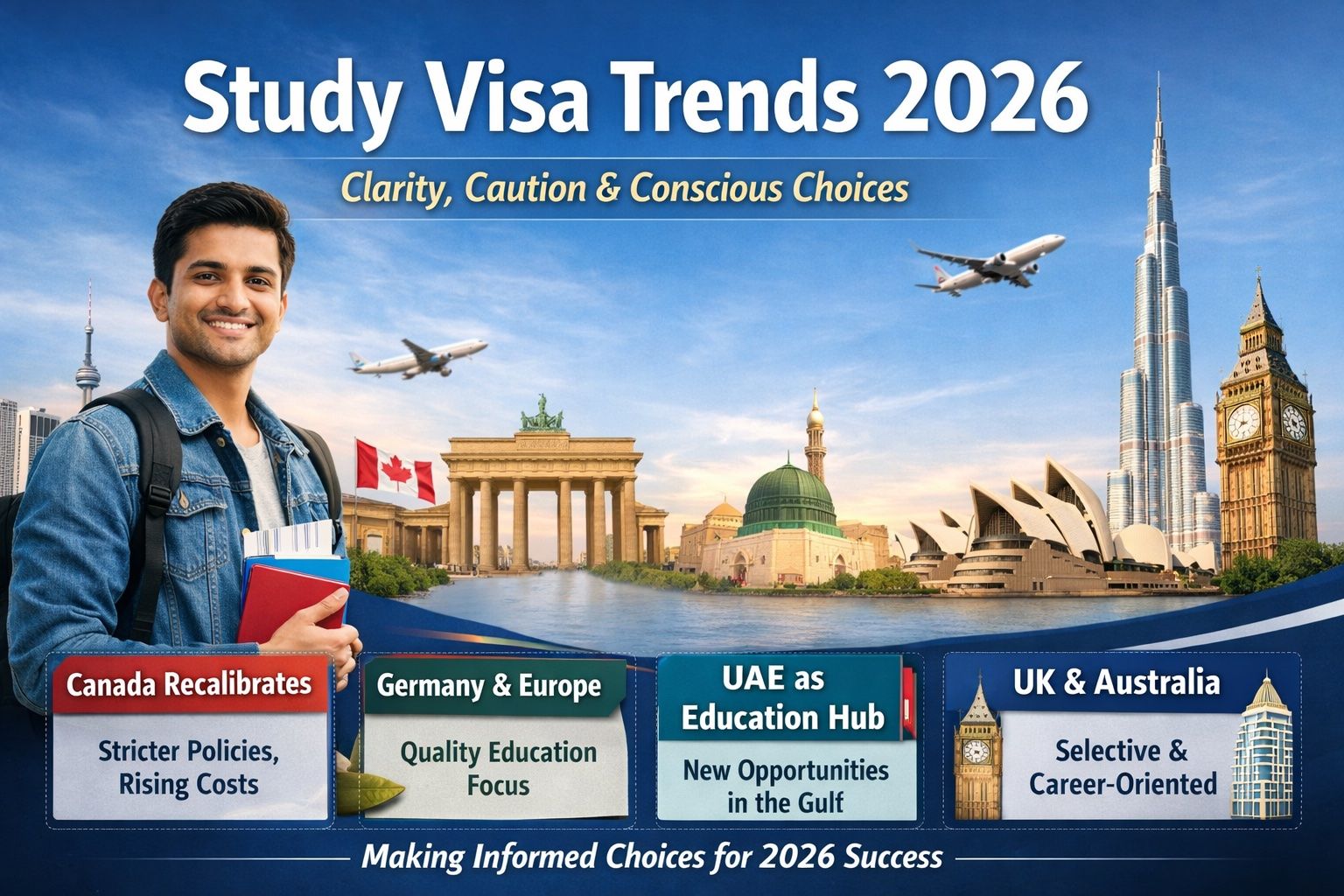
Canada Steps Back, Introspection Steps In
For a long time, Canada symbolised hope for thousands of Indian students. Affordable education, liberal post-study work options, and pathways to permanent residency created a powerful pull. However, policy tightening, rising living costs, capped student permits, and stricter compliance norms have changed the atmosphere. Refusals have increased, especially where profiles are weak or documentation lacks coherence. Families are now realising that Canada is no longer a one-size-fits-all solution. It remains a strong destination, but only for students with clear academic continuity, financial transparency, and realistic expectations.
This recalibration has encouraged families to pause, reflect, and explore alternatives rather than rush into applications based on old success stories.
Germany and Europe: Education Before Immigration
Among all emerging preferences, Germany stands out for its consistency and integrity. Public universities, low or no tuition fees, globally respected engineering and management programs, and an 18-month post-study job search visa have made Germany especially attractive for 2026 intakes. What students appreciate most is the honesty of the system. Germany does not promise shortcuts to settlement; it offers education, skill-building, and time to prove oneself in the labour market.
Across continental Europe, similar thinking is visible. Countries like France, Ireland, Malta, Latvia, Finland and parts of Eastern Europe are quietly gaining traction among students who value academic depth over glamour. Language requirements and cultural adaptation are seen no longer as obstacles, but as investments in personal growth.
The UAE Emerges as a Strategic Hub
In recent years, the conversation around the United Arab Emirates has transformed dramatically. Once viewed mainly as a workplace destination, the UAE is now positioning itself as an education hub. International branch campuses, industry-linked programs, and proximity to India make it attractive, particularly for business, hospitality, logistics, and technology students. While long-term settlement pathways remain limited, career acceleration opportunities within the Gulf and beyond are becoming a serious consideration.
For many families, the UAE offers emotional comfort alongside professional exposure, a balance that is increasingly valued.
The UK and Australia: Selective but Stable
The United Kingdom and Australia continue to hold relevance, though with sharper scrutiny. Shorter courses, globally recognised degrees, and structured post-study work options still appeal, but rising costs demand careful financial planning. These destinations are now best suited for students with strong academic profiles and clear career objectives rather than exploratory ambitions.
A New Mindset for a New Era
What defines 2026 is not the rise or fall of any single country, but the evolution of the student mindset. Families are moving away from herd mentality. They are listening more, researching deeper, and seeking guidance rooted in experience rather than marketing noise. As a consultant, I feel this change deeply. Consultant’s role today is less about selling destinations and more about aligning education with life purpose, financial reality, and long-term dignity.
Studying abroad remains a powerful tool for transformation, but only when chosen consciously. The era of blind optimism has ended. The era of informed aspiration has begun.
As this new year unfolds, I remind every student and parent that patience is not delay, and caution is not fear. The right decision, taken at the right time, creates not just success abroad but peace at home. That, in the end, is the true measure of a good study visa journey.
Call or drop WhatsApp text +91-9888481965
William Wordsworth’s Timeless Lesson for a Noisy World

Explore William Wordsworth’s insight on wisdom, humility, and the beauty of simple living in a rushed world.


No Comment