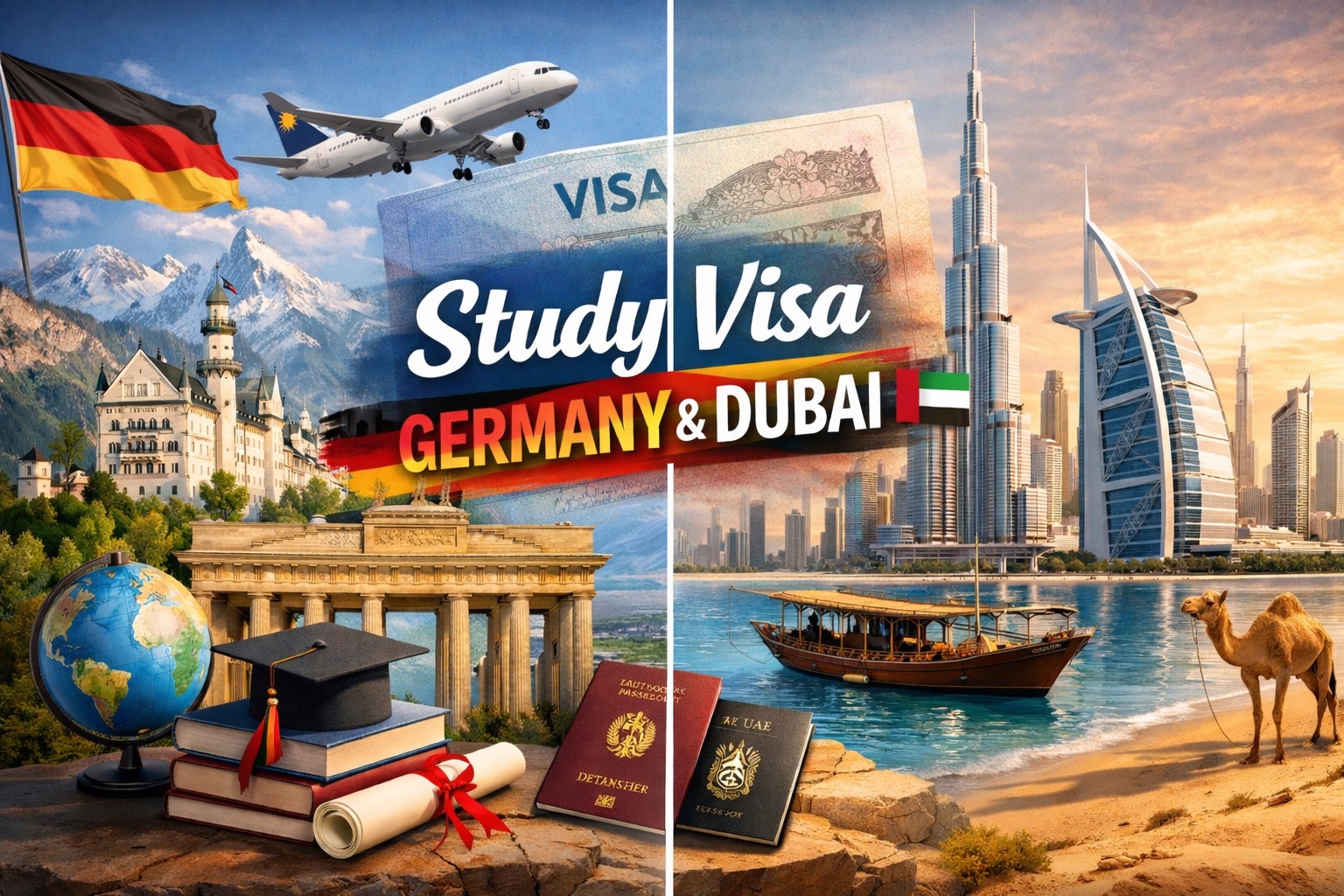
For almost thirty years, I have worked with students and families across Punjab, Haryana, Himachal Pradesh, Delhi, and North India. I have seen dreams rise, fall, and rise again. I have watched students move from blindly chasing trends to assessing education abroad with maturity, logic, and clarity of purpose. Overseas education is no longer just about getting a visa stamp; it has become a long-term investment where every family wants clarity, affordability, and a realistic pathway toward career and settlement.
There was once a time when Canada dominated the imagination of Punjabi families. Canada meant opportunity, post-study work, settlement, and security. The UK, Australia, and the USA were also aspirational pillars for global education. But the cycle has changed. Policy uncertainty, higher tuition fees, frequent rule revisions, and unclear post-study options in traditional destinations have forced students to pause and rethink. The mindset shift is visible — instead of following the crowd, students are now prioritizing outcomes.
In this shift, two destinations have emerged as thoughtful, future-ready choices: Germany and the United Arab Emirates (UAE). These countries are not attracting students because they are fashionable; they are attracting them because they make sense.
Germany: The Rise of Affordable, Structured, and Career-Focused Education
Germany’s appeal today is rooted in both logic and aspiration. It is a destination where affordability meets academic strength, and where academic strength meets genuine post-study career possibilities. Public universities charging very low or sometimes zero tuition fees have opened doors for middle-class students who previously felt global education was beyond reach. Instead of selling assets or taking large private loans, families are finding a path that protects both education and financial dignity.
Engineering, mechanical trades, IT, applied sciences, automotive technology, renewable energy, and research-driven programs have become the backbone of Indian student interest. Punjabi and North Indian students traditionally excel in these areas, and Germany offers both academic depth and industry relevance. The classroom-to-career pipeline is realistic, structured, and supported by the country’s industrial ecosystem. Germany is not just teaching; it is preparing.
Visa transparency is another pillar of confidence. The German visa framework, although documentation-focused, is largely rule-based rather than discretionary. Students and parents appreciate predictability. After graduation, the post-study job-seeker visa provides breathing space and opportunity. For those who find suitable employment, the pathway to work visas and even long-term residence is systematic rather than unpredictable. That structural clarity is one of the biggest reasons Germany has quietly become a first choice rather than a backup.
Today, Indian students are no longer choosing Germany only for degrees; they are choosing it for outcomes.
The UAE: A New-Age Education Hub for Modern Careers
If Germany represents structure, the UAE represents speed, agility, and modernity. Dubai and Abu Dhabi have transformed into international education centres hosting global universities, foreign branch campuses, and specialised institutes designed to match the needs of modern industries. For Indian students, this creates a bridge between world-class education and real-time market exposure.
Business, management, fintech, analytics, logistics, hospitality, healthcare, and IT-driven programs have rapidly gained popularity. Several universities integrate internships, part-time opportunities, and project-based learning, allowing students to experience the workplace even before graduation. The networking advantage is significant. Companies in the UAE actively engage with universities, offering internships, placements, and professional pathways for skilled graduates. Students who are confident with communication and willing to grow professionally often progress quickly.
For Punjabi and North Indian families, the UAE offers geographical comfort, cultural familiarity, and emotional reassurance. The presence of Indian and Punjabi communities, food habits that feel familiar, and proximity to home reduce the psychological pressure of sending children abroad. Parents feel connected; students feel supported; the transition feels human.
The UAE does not claim to be a traditional immigration destination the way Canada once did. Instead, it offers something different: a platform for global exposure, a fast-moving economy, and the chance to build credentials and experience without the initial financial and emotional shock that many students face in distant countries. It is not a shortcut; it is a springboard.
The Mindset Shift: From Trend-Following to Outcome-Planning
The most encouraging change I have seen over the years is the evolution of thought. Instead of asking “Where is everyone going?”, families are asking “What will this lead to?” The discussion has moved from hype to homework. Questions about fee structure, stay-back options, part-time work policies, settlement pathways, and job market realities are asked with seriousness. This maturity is healthy, necessary, and overdue.
The truth is simple: there is no universal best country. There are only suitable countries, depending on the student. For a technically inclined student with strong academic performance and patience for process, Germany is a meaningful choice. For a student seeking exposure, modern careers, and proximity to home with international credentials, the UAE becomes a strong option. The strength lies in matching the student with the destination, not forcing the destination onto the student.
Guidance from Three Decades of Experience
After nearly thirty years in this profession, my belief is clearer than ever. A study visa is not a ticket to a foreign country; it is a ticket to a future. The country you choose shapes your lifestyle, your opportunities, your growth, and even the mindset you develop. The decision deserves honesty, research, and planning.
Germany and the UAE are not replacements for Canada, the UK, Australia, or the USA; they are alternatives for students who want cost control, defined structure, and faster clarity. These destinations are aligned with the evolving priorities of Indian families — priorities that value stability, affordability, and realistic pathways over glamour and hype.
The trend is not just changing; it is maturing. Students are no longer travelling for status. They are travelling with a purpose.
If you are planning to study abroad, call +91-9888481965
Master’s in Tourism and Recreation (M.A.) at EIIET Berlin

Master’s in Tourism and Recreation program, offered by the esteemed Institute of Berlin (EIIET) in partnership with the University of Tourism and Hotel Management (WSTiH). This intensive two-year postgraduate course meticulously equips ambitious students with the advanced skills and knowledge to position themselves as financial and strategic leaders in the ever-evolving tourism industry.


No Comment