Updated on March 5th, 2026
…scandals that shake the conscience of the world
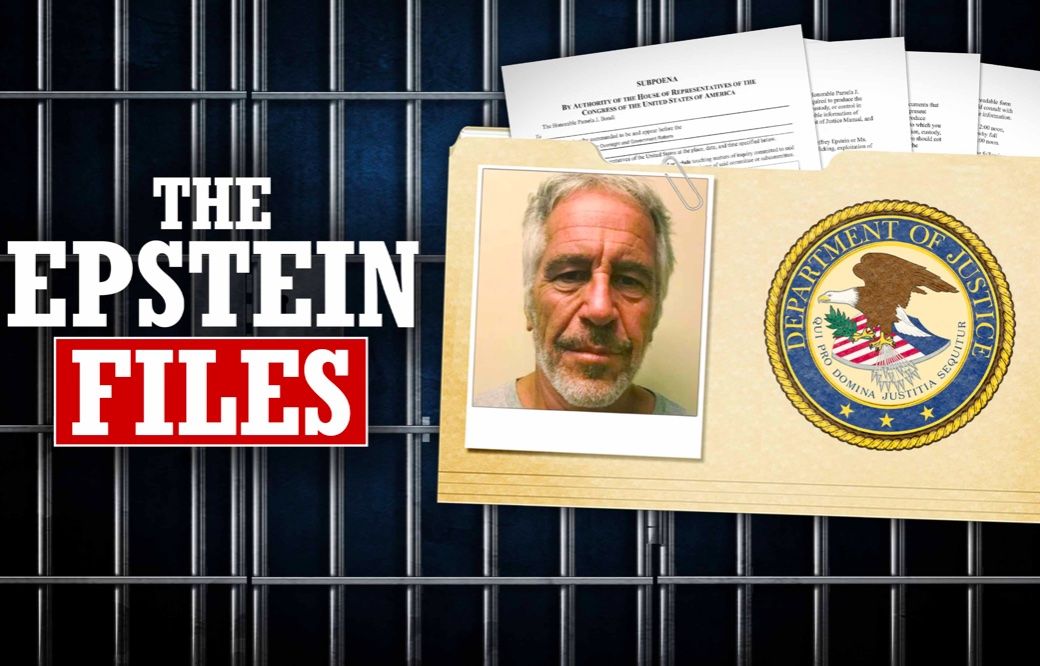
The world has seen many scandals involving money, sex, and power. But very few have carried the same chilling aftertaste as the Epstein Files—a growing mountain of declassified documents, emails, flight logs, photographs, and court records that has been released to the public domain under the court’s order now in January 2026.
Going back in August 2019, Epstein was found dead in his jail cell, and authorities officially ruled it a suicide. But circumstances created a suspense across the world. For years after Jeffrey Epstein’s death, a growing section of the public refused to accept that the story was over. Across social media, newsrooms, and legal circles, one question kept returning like a drumbeat: Who else was involved?
The public pressure was not merely curiosity. It was a demand for accountability. A demand for transparency. A demand for justice for the girls whose lives were shattered, while the world’s most powerful people kept attending galas, sitting on boards, and delivering speeches about morality.
The Files Finally Spoke
Slowly, under public pressure, in November 2025, the US Congress passed the Epstein Files Transparency Act and assured that the Epstein Files would be released, and finally, the sealed files began to open. A small portion of the Epstein Files was released by the US Department of Justice (DoJ), which includes emails, police reports, photographs, and survivor testimonies. And it exploded across media platforms like a bomb. It shook the world of the global elite. These files are not just legal documents. They are not dusty court records. They are a mirror. A mirror that reflects an uncomfortable truth. Behind polished political speeches, behind billionaire philanthropy, and behind celebrity glamour, a shadow world can exist. And it can survive for years. It can remain protected by money, by influence.
Jeffrey Epstein’s story is not only about one man. It is not only about his crimes. It shows how people can bend an entire system. They can misuse social power, weaken legal systems, manipulate political structures, protect the powerful, ignore the vulnerable, and silence victims. What shocks people is the size of the network. The methods were smart and planned. Recruitment was not random. Many powerful names appear around him. And the biggest fear is that it was never just one man.
Brooklyn Teacher to Billionaire Financier
Jeffrey Epstein’s rise is one of the most unsettling examples of modern social engineering. He began as a math teacher in Brooklyn, far from the world of private jets and island mansions. But over time, he transformed into a financial advisor for billionaires, quietly building his wealth and status. By the time he reached the peak of his influence, his fortune was estimated at around $600 million, and his lifestyle resembled that of a man who had become untouchable.
Epstein was not merely rich—he was strategically connected. He cultivated friendships with world leaders, scientists, and celebrity icons. Photographs, party appearances, and reported meetings positioned him not as an outsider, but as someone accepted in circles where access is tightly controlled.
This is where the story begins to feel less like a crime report and more like a warning about how power works in the real world.
1990s–Early 2000s: The Mask of Luxury and Influence
Jeffrey Epstein’s criminal world did not begin with an island, a mansion, or global headlines. It began quietly, hidden behind wealth, charm, and the protective illusion of respectability. Long before the world learned the name “Little St. James,” Epstein had already built a pattern of abuse that followed the same chilling structure again and again: access, grooming, manipulation, and silence. He targeted girls who were very young, often teenagers, and many from vulnerable backgrounds.
Epstein used fear, control, and dependency to trap young girls in a cycle of exploitation. What made the operation even more disturbing was the recruitment structure. Victims were allegedly pressured or paid to bring other girls, creating a chain where one exploited girl was turned into a recruiter for the next.
The First Crack in the Wall: A Girl Speaks, and Justice Bends
Eventually, one girl came out and demanded justice. She approached law enforcement and filed a complaint, turning private trauma into a public legal matter. By the mid-2000s, Epstein was under investigation for serious sexual offences involving minors. Instead, what followed became one of the most controversial legal outcomes in modern American history.
In 2008, Epstein received a plea deal so extraordinary that it became infamous. Rather than facing full federal charges, he was allowed to plead guilty to lesser offences and was sentenced in a way that appeared almost designed to preserve his comfort. This deal was known as a ‘Sweetheart deal‘. He served only 13 months in a low-security facility, and reports suggested he was granted work-release privileges that allowed him to leave jail for hours each day. To the public, this did not look like punishment. It looked like privilege. It created a permanent suspicion that Epstein was not merely protected by expensive lawyers, but by something deeper and more structural, a system that bends when the accused belongs to a certain class. When Epstein walked out after such a light sentence, it felt like the law had spoken clearly: some people do not face consequences the way others do.
A Private Island Empire: A Luxury Mask for Organised Abuse
After the plea deal, Epstein did not disappear. He continued his activities. Over time, he became more careful, more insulated, and far more dangerous. During this period, he acquired a private island of around 72 acres in the United States. Virgin Islands, Little St. James, transforming it into a symbol of wealth, secrecy, and isolation. From the outside, it looked like a billionaire’s paradise. But according to victim accounts and investigative reporting, it became something far darker, a controlled environment where young girls were brought, arranged, and exploited.
The same recruitment model continued, only now amplified by money and international reach. Girls were allegedly flown in, managed through intermediaries, and presented for sexual activity, while the isolation of the island itself became a weapon. Surrounded by sea, cut off from normal escape routes, victims were not only abused but controlled. At the same time, Epstein’s social circle expanded into the elite global society. He was seen around famous personalities, influential businessmen, and political power networks, which added a second layer of horror to the story.
In July 2019, Epstein was arrested again, this time on federal sex trafficking charges, and for many, it felt like justice had finally returned after years of delay. But the reckoning never came. In August 2019, Epstein was found dead in his jail cell. Authorities ruled it a suicide. But the news only intensified public demands. People wanted the files to be released. With Epstein gone, the documents were all that remained. And the world was left with a haunting question—one that still refuses to fade.
To the outside world, Epstein was a symbol of wealth and access. Behind the scenes, however, a predatory structure was being built—one that would eventually be described as an organised trafficking system targeting minors.
The Epstein Files: The Names That Keep Returning

The “Epstein Files” refer to a massive and still-growing body of material—court documents, emails, photos, and flight logs—gradually being unsealed and released. Within these documents, multiple high-profile names appear. Media reports mention individuals such as Bill Clinton, Donald Trump, Bill Gates, Chris Tucker, Allen, Sergey Brin, David Blaine, and others, along with references to political strategists and intellectual figures, including notable Indian personalities from business and political circles. Many more names may be revealed in the coming days.
It is essential to draw the line clearly: association is not proof of criminal guilt. A photograph, a flight log, or an email may show contact, not criminality. But in a scandal of this scale, even proximity raises uncomfortable questions.
The Epstein files are important because they expose us to how power, money, and influence intersect with systemic failure. Of course, many names appear in these documents, but there is also a failure of investigation, redactions, and a lack of accountability over the years.
The Social Shock of the Epstein Scandal
The Epstein Files have done more than expose a criminal. They have exposed a culture. In today’s society, the effect is raising questions about the public system, courts, and institutions. Epstein’s scandal has become a symbol of modern hypocrisy: leaders who preach values while moving through networks that conceal exploitation; celebrities who campaign for causes while socialising with predators; institutions that claim to protect the vulnerable while quietly protecting the influential.
The world continues to watch the Epstein Files unfold—not because people crave scandal, but because they sense something far bigger beneath the surface. What has come out so far feels less like the end of a story and more like the beginning of many chapters still waiting to be revealed. In the coming days, more truth may emerge, and more faces may be exposed.
Yet the biggest questions remain unanswered. Who was Jeffrey Epstein in reality—just a criminal, or a carefully protected operator? Who stood behind him, enabling his reach and shielding his network? Did he die by suicide, was he murdered, or is there still a shadow of doubt about whether he is truly gone? And what else lies buried in the files—names, connections, and details that could shake powerful people and the system.
These documents demand more than headlines. They demand deeper investigation, verified facts, and accountability—because what is at stake is not gossip, but the truth about how power can protect itself in silence.
Disclaimer: The information in this article is based on reports and details available in the public domain at the time of writing. We do not independently verify or claim authority over the accuracy or completeness of this information.
William Wordsworth’s Timeless Lesson for a Noisy World

Explore William Wordsworth’s insight on wisdom, humility, and the beauty of simple living in a rushed world.


No Comment