Updated on July 6th, 2026
A Journey into the Heart of Parvati Valley from Kasol to Tosh
Some journeys are not measured in kilometres but in feelings. Our recent two-day trip to the enchanting Parvati Valley in the second half of April became one such memory. We travelled through the scenic route via Mandi and reached Kasol, a place that has long attracted travellers, backpackers, and seekers of mountain peace. Though Kasol has become more commercial over the years, its natural beauty remains untouched in spirit. Snowy peaks, pine forests, and the ever-flowing Parvati River continue to bless every visitor who pauses long enough to notice.
We booked our stay at River Raga, a riverside camp property in Kasol. Though the room carried many instructions and notices, the warmth of the surroundings made those details insignificant. Sometimes nature itself becomes the real host.
The Morning Music of the Parvati River
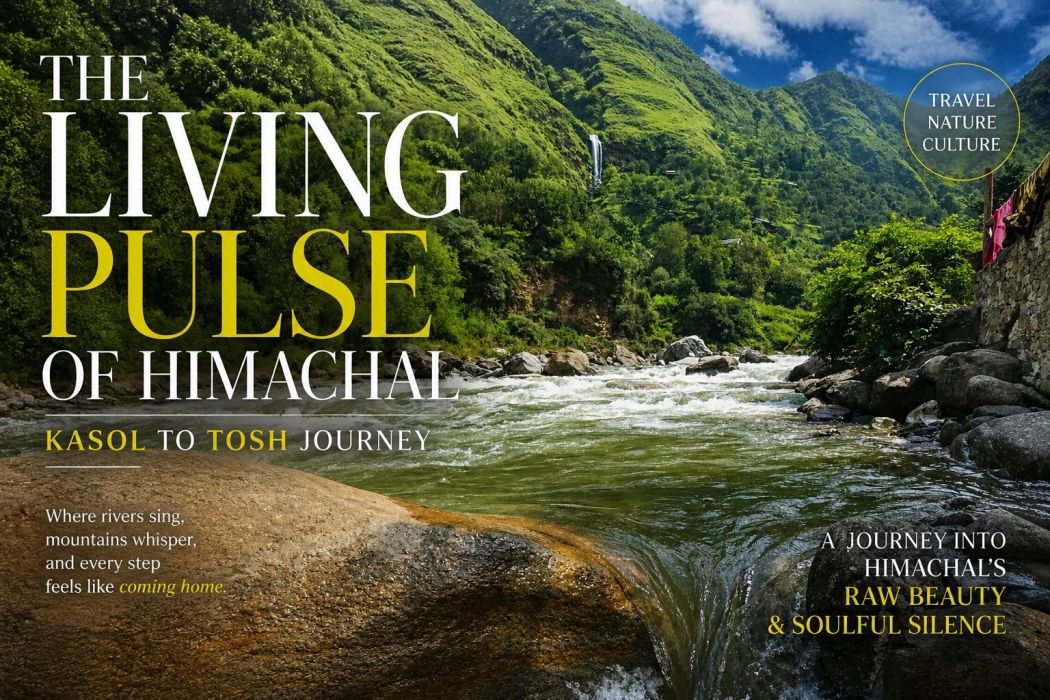
The finest part of the stay was the morning. Sitting near the Parvati River with a cup of tea in hand felt like sitting inside a living poem. The sound of flowing water created a natural melody no human instrument could match. Birds added their own notes from nearby trees, while cool mountain air carried the fragrance of pine forests.


I sat on rocks near the flowing stream for a long time, simply watching the river move around every obstacle. Large stones stood firmly in its path, yet the water never stopped. It curved, danced, and continued forward. Nature often teaches without speaking. That morning, the river reminded me that life, too, must keep flowing despite hindrances.
Kasol mornings have a charm of their own. The valley wakes slowly. Cafés begin brewing coffee, travellers stretch in the sun, and mountains shine in the early light. We had breakfast and later enjoyed coffee outside, soaking in the place’s calm.
Kasol: The Mini Israel of Himachal
Kasol is one of the most visited destinations in Himachal Pradesh. Located on the banks of the Parvati River, it is known for its café culture, trekking routes, Israeli food influence, and youthful energy. Over the years, tourism has transformed the village into a busy tourist hub. Streets are lined with cafés, bakeries, guesthouses, travel shops, and music-filled corners.
Yet beneath the commercial surface lies a deeply beautiful destination. For travellers, Kasol works perfectly as a base for nearby explorations such as Manikaran Sahib, Tosh Village, Chalal, Pulga, Kalga and Kheerganga.
The best months to visit are from March to June and September to November. April, when we travelled, was ideal—pleasant days, cool evenings, and snow visible on the surrounding peaks.
A Sacred Pause at Manikaran Sahib
The next morning after breakfast, we headed to Manikaran Sahib, only around three kilometres from our stay. The drive is short but beautiful, following the Parvati River through the valley.
Manikaran Sahib is one of the most revered Sikh pilgrimage sites in Himachal Pradesh. The historic Gurudwara is associated with Guru Nanak Dev Ji and is visited by devotees from across India. We offered prayers there and sat peacefully while listening to the path. The spiritual atmosphere of the place has its own soothing power.


Another remarkable feature of Manikaran is its natural hot springs. These geothermal waters are famous for being hot enough to cook food, a tradition that continues today. Rice and lentils are often prepared in cloth bags, dipped in spring water. The blend of faith, mountains, steam, and a flowing river makes Manikaran unforgettable.
Tosh: Where the Sky Feels Closer
Every bend opened into scenes so beautiful that the discomfort of travel was easily forgotten.
After spending a few hours at Manikaran Sahib, we set off for Tosh Village, about two hours away, depending on road conditions. The road was rough in parts, but mountain journeys often reward patience. The area is prone to landslides, so if there is heavy, continuous rain in the days leading up to your visit, it would be a good idea to call to check road conditions. The road leading to Tosh was not in good condition, with several stretches visibly damaged along the way. Even upon reaching Tosh, the parking area reflects similar wear and tear. Vehicles cannot go all the way in, so you need to walk approximately 400 meters from Tosh. However, this seems to be a temporary phase, and with time, the conditions are likely to improve, making the journey smoother for future travellers.
Tosh sits at an altitude of around 2,400 metres and is often considered one of the last inhabited villages of the Parvati Valley. Wooden homes, mountain slopes, narrow pathways, and dramatic snow-covered peaks give it a timeless charm. It feels less commercial and more soulful than Kasol.


We checked into Hello Tosh for our stay. By the time we arrived, exhaustion had taken over. But mountains know how to heal tired travellers. Suddenly, the weather changed. Rain began to fall, and the entire landscape transformed into a cinematic wonder. Snow peaks disappeared behind mist, raindrops on rooftops, and cool winds erased all tiredness within minutes. The accommodation was very clean and cosy, making us feel comfortable right away. The balcony opened to beautiful views of snow-capped mountains. Just below the hotel, a gentle stream flowed continuously, and a small bridge over it added a special charm to the peaceful and scenic surroundings. It was almost evening, and after having some rest, we decided to go outside and see the village tosh.
Café Life and Village Warmth
Ranji was excited to explore Tosh immediately. Umbrella in hand, she walked through the village lanes and returned happily, reporting many cafés, including a German Bakery and several inviting spots.
In the excitement of travel, we had missed lunch. Later, we ordered a dish called All Pollo, a lasagne-style preparation at Eye Sky Tosh café. Its rich taste made us forget the day’s hunger and tiredness. We walked the streets of Tosh and tried to take in the beauty of each corner.
Tosh is famous for this blend of relaxed café culture and simple village life. Travellers come for peace, long stays, treks, music, and mountain silence. Locals are welcoming, and the atmosphere remains more grounded than many overdeveloped hill destinations.
The Living Pulse of Himachal
As night fell, we ordered Karahi Chicken with Tawa chapati and had dinner in the room, listening to the sound of flowing water outside. It was a wonderful time with memorable moments.
If Kasol is lively and commercial, Tosh still feels raw and spiritual. It is a place where mountains breathe, rivers sing, and life moves in its purest rhythm. I do not know when I will revisit, but I know one thing with certainty—Tosh will remain alive in my memories and dreams for a long time. Few words in a poetic mood- सफ़र खूबसूरत है मंज़िल से भी।
Read this: Stories around Every Turn
Master’s in Tourism and Recreation (M.A.) at EIIET Berlin

Master’s in Tourism and Recreation program, offered by the esteemed Institute of Berlin (EIIET) in partnership with the University of Tourism and Hotel Management (WSTiH). This intensive two-year postgraduate course meticulously equips ambitious students with the advanced skills and knowledge to position themselves as financial and strategic leaders in the ever-evolving tourism industry.


1 Comment
Beautifully written and full of mountain soul. The way the journey from Kasol to Tosh is described makes the reader actually feel the silence of the valleys, the cafés, the walks, and the peaceful Himachali vibe. The emotional connection with nature and local life gives this travel story a very authentic touch. Himachal is not just a destination; it becomes an experience through your words. Truly inspiring for every traveller who loves mountains and meaningful journeys. 🌿🏔️
— Rajni Singh