Updated on August 31st, 2026
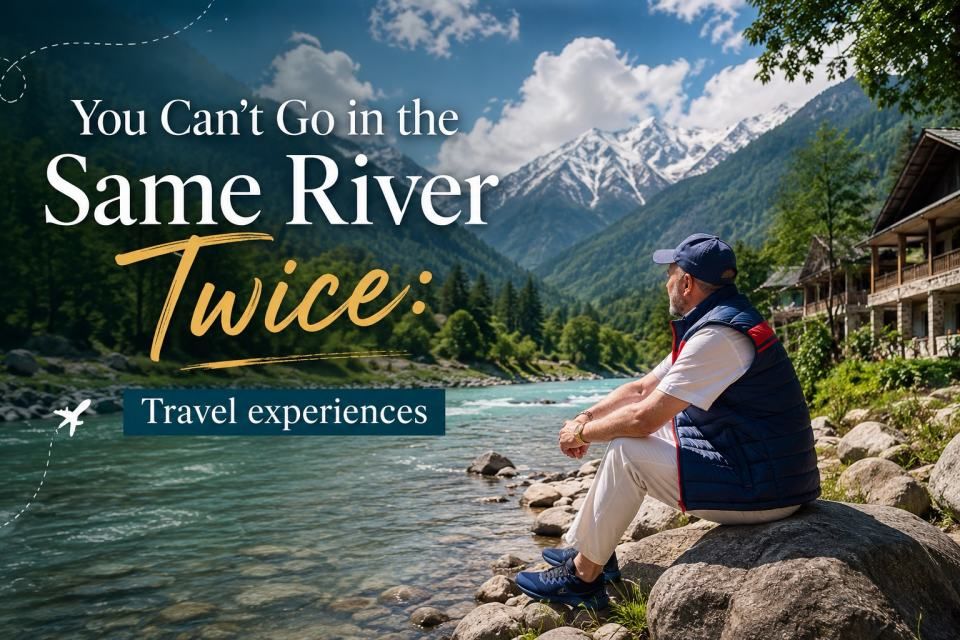
“No man ever steps in the same river twice, for it’s not the same river and he’s not the same man.” — Heraclitus
Every Journey Begins Long Before the Road
Some quotes stay with us for a lifetime because they reveal their meaning gradually. When I first came across the famous words of the Greek philosopher Heraclitus—“You can’t go in the same river twice”—I appreciated them as a clever observation about life. Years later, after countless journeys through the mountains of North India and abroad, I realised that the quote was not merely about rivers. It was about people, memories, time, and the quiet transformation that takes place within us without our noticing. Every trip I have taken through Himachal Pradesh and other destinations has helped me understand that although we may revisit the same destination, we never truly return to the same place, because both the landscape and the traveller have changed.
Living in Punjab has been a blessing for someone who finds peace in the mountains. Whenever the routine of daily life becomes overwhelming, I instinctively find myself driving towards Himachal Pradesh. Over the years, Dalhousie, Khajjiar, McLeod Ganj, Dharamkot, Kasol, Tosh, Barot, Jibhi and Tirthan Valley have become more than beautiful destinations marked on a map. They have become familiar companions, each offering a different lesson every time I visit. Interestingly, many readers of my blog ask why I continue returning to places I have already explored. My answer has always been the same: I am not returning to the same place. I am returning as a different person.
Dalhousie: A Place That Grew as I Grew
When I wrote my travel story Dalhousie & Khajjiar: A Journey That Grows With Me on AdvJaspal.com, I realised that I was not simply documenting a holiday. I was recording a relationship that had evolved over many years. My earliest memories of Dalhousie are filled with excitement. Every viewpoint demanded a photograph, every colonial building fascinated me, and every winding road seemed to reveal another postcard-worthy landscape. Like most travellers, I was eager to see everything.


As the years passed, my reasons for visiting Dalhousie quietly changed. Today, I rarely feel the need to rush from one attraction to another. Instead, I find greater joy in sitting on a quiet bench overlooking the valley, watching clouds drift lazily through forests of deodar and pine, or simply listening to birdsong echoing through the hills. The town itself has changed with every season I have witnessed—snow-covered winters, vibrant monsoons, and clear autumn mornings—but the greater transformation has taken place within me. I now understand that travel is not measured by the number of places we visit but by the depth with which we experience them.
“The mountains remain patient because they know every traveller arrives carrying a different story.”
Khajjiar: The Beauty of Returning
Khajjiar, often celebrated as the Mini Switzerland of India, has always possessed a timeless charm. Yet every time I walk across its famous meadow, I notice something that escaped my attention during previous visits. Sometimes it is the changing light filtering through ancient cedar trees; at other times it is the laughter of children playing freely or the peaceful silence that descends after the tourists have left for the day. Nature has an extraordinary ability to appear familiar while constantly reinventing itself.
What fascinates me most is that I never carry the same thoughts when I stand there. During one visit, I found myself thinking about future dreams; during another, I reflected on memories of journeys already completed. The landscape remained recognisable, yet my perspective had shifted. That is perhaps the finest example of Heraclitus’ philosophy. The meadow is never exactly the same because the seasons continuously reshape it, and neither is the person standing in the middle of it.
McLeod Ganj and Dharamkot: Learning the Art of Slowing Down
Among all the destinations I have explored, McLeod Ganj occupies a special place in my heart. When I first visited, I was captivated by its Tibetan culture, colourful prayer flags, bustling cafés and magnificent views of the Dhauladhar mountains. Those attractions continue to delight me, but today I find myself appreciating subtler details that once escaped my notice. I enjoy watching monks walk calmly through narrow streets, hearing the gentle rhythm of temple prayers, and observing travellers from different parts of the world sharing stories over cups of coffee.
A short walk uphill leads to Dharamkot, a village that seems to exist at a gentler pace than the rest of the world. The atmosphere there encourages reflection rather than activity. It has become one of my favourite places to pause, breathe deeply and allow my thoughts to settle. Earlier, I travelled in search of spectacular views; now I travel in search of quiet moments. Dharamkot has taught me that peace is not found in isolation from the world but in learning how to be fully present within it.
“The greatest view a mountain offers is often the one we discover within ourselves.”
Kasol and Tosh: Following the River of Time
Few journeys have influenced me as deeply as travelling from Kasol to Tosh. I have written before that every bend in the road tells a story, and I continue to believe that no description captures the Parvati Valley more accurately. The river accompanies travellers throughout much of the journey, flowing with remarkable determination as though reminding us that movement is the natural condition of life.


Whenever I sit beside the Parvati River, Heraclitus’ words return to my mind. The water passing before my eyes has never flowed there before, and the person watching it has also changed since the previous visit. Earlier in life, I measured travel by destinations reached and photographs collected. Today, I value conversations with local people, long walks through forests, the aroma of fresh mountain air and the simple pleasure of watching the evening light settle over distant peaks. Tosh, with its peaceful atmosphere and breathtaking views, has become less of a destination and more of a reminder that life’s greatest rewards often come when we stop rushing.
The Hidden Corners That Stay Forever
While famous hill stations continue to attract thousands of visitors, some of my fondest memories are of quieter places such as Barot, Jibhi, and the Tirthan Valley. These destinations have never tried to impress me with grand attractions. Instead, they have offered something far more valuable: simplicity. Gentle rivers, wooden houses, friendly villagers and forests untouched by excessive tourism have shown me that happiness often resides in ordinary moments rather than extraordinary spectacles.
Some of the most meaningful experiences I have carried home were never planned. They emerged from conversations with strangers, unexpected rain showers, roadside tea stalls, early-morning walks, and evenings spent watching clouds disappear behind distant ridges. Such moments rarely appear in travel itineraries, yet they remain with us far longer than photographs.
Travel as a Journey Within
As I look back on the stories I have written for AdvJaspal.com, I realise that they are not merely travel blogs describing beautiful places. They are chapters of my own life. Each destination represents a different stage of personal growth, a different way of seeing the world and a different understanding of what truly matters. Travel has gradually shifted my attention away from ticking destinations off a list towards appreciating experiences that cannot be measured or purchased.
The mountains have become silent teachers. They have taught me patience during long drives, humility before the grandeur of nature, gratitude for simple comforts and acceptance of life’s constant changes. Every journey has reminded me that the destination is never the only thing worth discovering. Often, the most important discovery is the person we become along the way.
The River Continues to Flow
Whenever I begin another journey from Punjab towards the Himalayas, I know that the roads ahead will appear both familiar and new. Dalhousie will welcome me differently. McLeod Ganj will offer another quiet lesson. Kasol will echo with the timeless music of the Parvati River, and Tosh will once again remind me that life is best appreciated slowly. The mountains will continue to stand with quiet dignity, while I will continue to change with every passing year.
Heraclitus spoke about rivers, but after years of wandering through the different destinations, I have come to believe that his wisdom belongs equally to mountain roads. We never truly revisit a destination, because time has already transformed both the landscape and ourselves. That is why I continue travelling—not to repeat old experiences, but to discover the new person waiting at the end of every familiar road.
“The greatest gift of travel is not that it shows us new places; it gently introduces us to new versions of ourselves.”
Chasing Clouds: A Beautiful Journey from Sacred Ganga to Mountains

Chasing Clouds: A beautiful journey from Haridwar to Mussoorie and Landour, exploring monsoon mountains, misty roads, nature, love and unforgettable moments.


No Comment